AI adoption, hybrid work, and evolving skills are rapidly transforming India's workplaces. Employers and employees must adapt by focusing on digital capabilities, flexibility, and wellbeing to thrive in this changing environment.
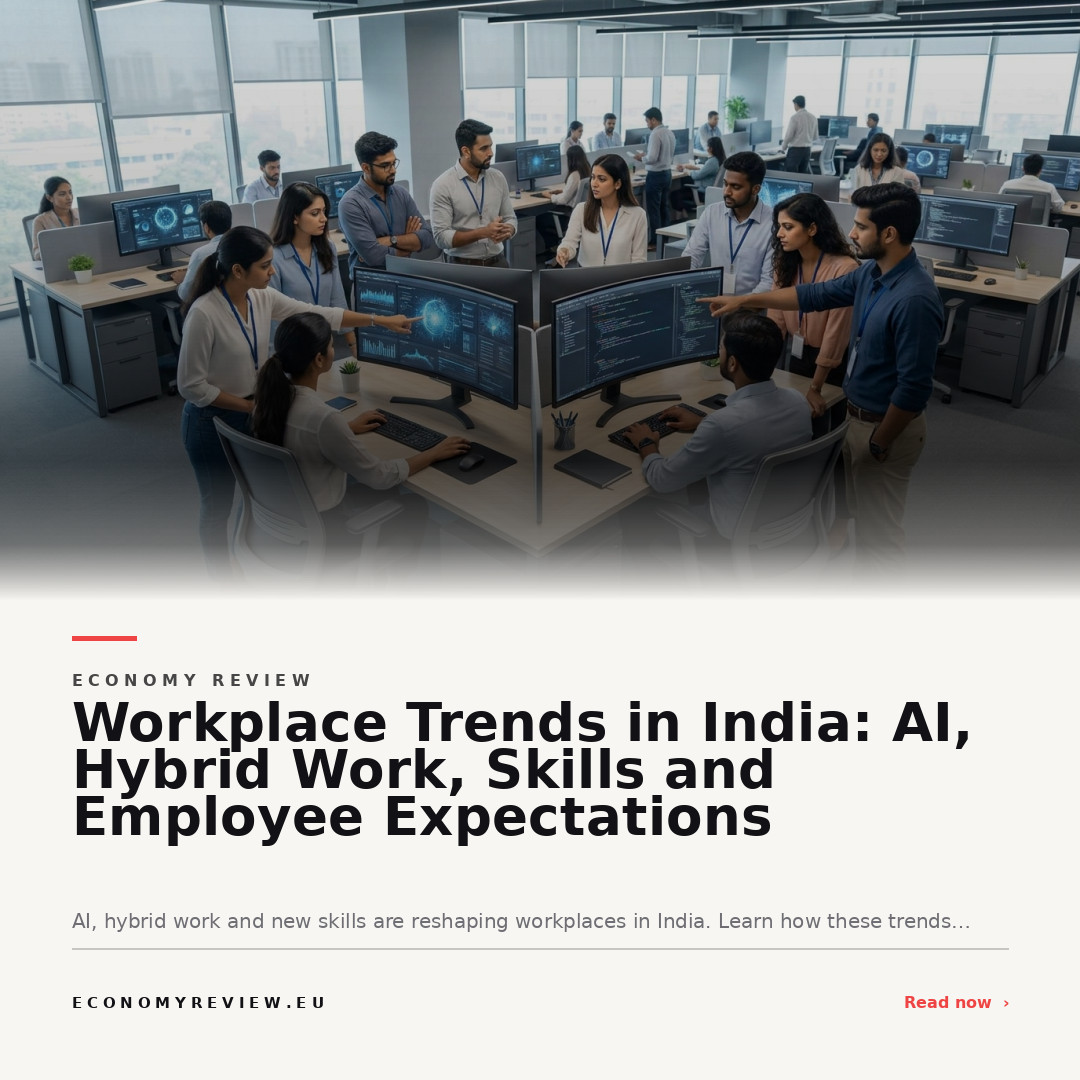
The Indian workplace is experiencing rapid transformation, driven by artificial intelligence, a renewed interest in hybrid work, evolving skill demands and rising employee expectations. By late 2026, India has become a global standout in AI adoption at work, while both employers and workers grapple with the implications of these technological and cultural shifts. Companies and professionals alike need to understand that India's future of work is being shaped not just by technology, but by the unique interplay of human, organisational, and societal factors.
- India leads the world in frequent workplace AI use, with 80% of employees using AI multiple times a week in 2026 [3].
- Hybrid work is valued, but only 38% of employers currently offer fully remote options despite student preferences [5].
- AI, cybersecurity, digital, and data skills are core for employers and workers planning ahead [5].
What Is Changing in India’s Workplaces?
India's workplaces have moved beyond experimentation with digital tools; transformations are embedded in daily work and company policies. According to a wide array of industry surveys and workforce reports, the most visible changes are tighter integration of AI systems, renewed debate over where and how work happens, an upskilling surge targeting new capabilities, and an elevation of employee wellbeing and purpose as management priorities. Unlike global trends that sometimes pit technology against workers, India is emerging as a market where technological optimism and human-centric practices are developing together [1].
How AI Is Reshaping Jobs and Everyday Work
The growing role of artificial intelligence at work in India is indisputable. Eighty percent of Indian employees use AI multiple times per week, with 41% using it daily—both rates higher than in any other major global market as of 2026 [3]. The breadth of AI’s impact now spans data analysis, customer support, recruitment, and report preparation, according to the Society for Human Resource Management (SHRM) [6]. However, India's ‘Frontier Professionals’—employees redesigning work processes around AI—make up 32% of the AI-using workforce, twice the global average [1].


The prevailing view among Indian workers is that AI enhances their efficiency (81%) and empowers them to rethink their roles (75%). However, this optimism coexists with real challenges: 78% also report that workloads have increased substantially from AI-supported productivity gains. Furthermore, the depth of AI integration into daily performance—70% say AI fluency is now considered in performance reviews—underscores the rapid move from pilot to mainstream adoption.
Hybrid Work: Flexibility, Office Attendance and Collaboration
The debate around hybrid work and flexible arrangements is particularly significant in India, where preferences and reality do not always align. According to the 2026 NIIT India Skills Gap Report, 62% of students express a preference for hybrid work models. Yet only 38% of employers actually offer fully remote positions [5]. This disconnect is noteworthy, as it signals potential challenges in attracting young talent as workplace flexibility becomes an expectation for the new workforce generation. Moreover, organisations are seeking ways to balance the need for in-person collaboration and office culture with the productivity and autonomy benefits of remote and hybrid work arrangements. The evidence shows Indian professionals remain open to structured office attendance but place increasing value on the ability to choose how and where they work.
The Skills Indian Employers and Workers Need
With AI and digital tools at the centre of workplace transformation, the demand for new skills is intense. According to NIIT, the most critical capabilities for the coming years include AI literacy, cybersecurity expertise, advanced digital skills, and strong data analysis abilities [5]. Indian AI users particularly prioritise quality control of AI outputs (63%) and critical thinking (59%), at rates substantially higher than the global average [1]. As a result, upskilling is happening at scale: 84% of Indian employees report acquiring new skills specifically related to AI [2]. Performance reviews and hiring processes increasingly reward demonstrable skills over traditional credentials, accelerating a trend toward skills-based employment strategies.
The dynamic nature of these skill demands puts pressure on employers to invest in training, learning, and development. Competency in managing, validating, and collaborating with AI agents is becoming as important as technical proficiency itself. For workers, it signals the need to continuously improve analytical, creative, and digital capabilities to remain competitive and confident in the changing job market.
What Employees Expect from Employers
Employee expectations are evolving alongside technological and operational change. According to WTW’s 2026 survey, job security, opportunities for career growth, flexibility, personal health, and financial confidence now top the list of Indian employee priorities [2]. While 96% of advanced AI users see positive effects on quality and efficiency, nearly half (46%) remain concerned about AI’s impact on their job security [2]. The research suggests that addressing human needs in parallel with technology investment is crucial for engagement and retention.
Positive sentiment about AI is remarkably high in India (86%, compared to 65% globally). Yet this enthusiasm is nuanced: higher workloads and anxiety about change risk undermining morale if not managed proactively. Organisations must balance the promise of AI with clear communications, opportunities for upskilling, and policies that protect and support wellbeing.
Typische Probleme
Despite India’s leadership in AI-driven productivity gains, some persistent issues warrant attention. Notably, 78% of employees report that AI has led to significantly increased workloads, which raises the risk of burnout if organisations do not redesign jobs and workflows accordingly. There is also a well-identified ‘hybrid gap’: a substantial share of students and young jobseekers expect hybrid or remote options, but relatively few employers have adapted to this demand, potentially worsening early-career recruitment challenges [5]. Finally, concerns about job security and changing employee engagement levels suggest the human impact of digital transformation remains a work in progress—individual experience is not uniform across sectors or seniority levels.
Aktuelle Entwicklungen
Recent updates in October 2026 illustrate that AI is now deeply embedded in Indian business operations beyond small-scale pilots [6]. Concurrently, major employer surveys underscore the sustained anxiety felt by nearly half of the workforce about job security as AI reshapes their roles [2]. These developments highlight the dual urgency for Indian organisations: to mainstream AI adoption for competitiveness, and simultaneously create resilient, supportive cultures that help employees adapt to change.
Practical Steps for Organisations
Organisations that succeed in navigating these workplace shifts take proactive steps on several fronts. First, they invest in employee upskilling specific to AI and digital capabilities, making learning a core part of their offer. Second, they conduct regular assessments of workloads and workflow design, identifying where AI genuinely saves time versus where it inadvertently adds tasks or complexity. Third, they reconsider workplace policies—especially regarding flexibility and location of work—as employee demands drive new norms. Finally, forward-thinking organisations involve employees in shaping how AI and new work models are introduced, communicating both benefits and addressing worries about career growth and job security.
What Workers Can Do to Stay Prepared
For individual workers, staying competitive means developing skills that go beyond technical knowledge of AI tools. Critical thinking, judgement about the quality of AI output, adaptability, and creativity are increasingly rewarded—both in India and globally. Actively upskilling, seeking feedback, and remaining open to new roles and responsibilities can help employees navigate changes while showing employers their readiness for the future. Awareness of wellbeing, work-life balance and proactive health habits are also essential, as increased workloads become a reality of modern workplaces.
What These Trends Mean for the Future of Work in India
India’s trajectory suggests a future workplace where technology and human skills co-evolve, with AI augmenting—not replacing—employees in most industries. However, for companies, leaders, and policymakers, it is not enough to roll out new technologies; the challenge is to ensure these changes deliver value for workers as well as employers. Measures to foster both job security and digital agility, close the hybrid work expectation gap, and support constant upskilling will determine whether India’s workplaces remain competitive—and humane—on the world stage.
Related reading
For further context on how digital and AI-driven transformation is influencing the world of work, see KI in der Unternehmensredaktion: Praxisleitfaden für den digitalen Content-Workflow and Hybride Startup-Teams: Isolation gezielt vorbeugen – Praxistipps für soziale Verbundenheit.
Quellen
[1] India’s AI advantage is human: Microsoft Work Trend Index 2026 (Microsoft (Asia), 2026-09-03)
[2] Supporting employee wellbeing and resilience in the AI era - WTW (WTW)
[3] India Emerges as a Global Leader in Workplace AI Adoption: ADP Research (ADP India)
[6] Top Workplace Trends Shaping the Future of HR in 2026 and Beyond (SHRM)