SMEs trading across EU borders face legal, tax and information barriers. Founders should confirm each target market’s regulations, VAT, and standards ahead of launch to reduce risks, ensure compliance, and avoid costly delays.
Small and medium-sized enterprises (SMEs) looking to trade throughout the European Union face persistent barriers that challenge the ideal of a seamlessly integrated Single Market. In practice, cross-border sales require founders to grapple with divergent national rules, tax administration, and practical market hurdles. These obstacles affect both goods and services and require proactive checks before expansion to minimise risk and ease entry.
- The EU Single Market reduces tariffs but not all rules and admin for SMEs.
- Biggest barriers: national regulation, VAT obligations, patchy market data, and language differences.
- Thorough compliance review and localisation are vital for successful EU expansion.
Why the EU Single Market Still Feels Fragmented
Despite the legal removal of tariffs and quantitative restrictions, the European Single Market does not fully harmonise underlying national laws or sectoral requirements. This means SMEs encounter layered domestic rules, sector-specific regulations, and practical barriers upon entering new EU markets. The European Commission reports that inconsistencies in law and enforcement remain a major pain point. For SMEs, unlike multinationals, a lack of resources to manage divergent compliance requirements makes cross-border business more complex and risky.
Different National Rules, Standards and Product Requirements
The necessity to adapt goods and services to each Member State’s requirements is a significant challenge. SMEs frequently rework products for technical standards, safety, labelling and packaging tailored to each market. While many sectors are governed by EU-wide legislation, Member States maintain discretion in applying or interpreting conformity rules, producing new certification or documentation needs. As documented by the European Commission, each national authority may demand unique testing, approval or labelling—directly increasing the time and cost for founders scaling to new countries.


Why Services Face Extra Restrictions
Cross-border service provision is even more fragmented. Service SMEs confront authorisation rules, recognition of professional qualifications, and compliance with differing consumer protection measures in each country. Professions such as engineering or legal services have specific registration hurdles and licensing demands. For digital or online providers, issues like copyright, licensing and geo-blocking remain unresolved uniformly, often requiring additional adaptation to local practice.[3]
VAT, Tax and Cross-Border Administration
Administrative and tax compliance is a material concern for SMEs trading within the EU. While value added tax (VAT) is technically harmonised, each Member State enforces its thresholds, reporting cycles, and interpretations. SMEs expanding into another market regularly face new registration, differing periodic filing, and sometimes contradictory local rulings, all of which raise compliance costs. From July 2021, the VAT One Stop Shop (OSS) offers a centralised VAT return for B2C sales of goods and certain services, but this does not cover all situations. According to Accountancy Europe, as of 2023, a cross-border SME VAT scheme was in discussion and partial implementation, aiming to allow eligible small businesses to use home-country VAT exemptions in other Member States with specific eligibility rules. However, actual application, especially input VAT deduction, depends on how each state enacts the scheme, limiting its universal applicability. SMEs must check carefully whether and how such schemes can support their business in target countries.
Finding Reliable Market Information
SMEs often struggle to access adequate market intelligence on customer needs, competitors, or regulatory details in new countries. Gaps in reliable, up-to-date information create uncertainty in decision-making, pricing and strategy. Without robust local partners or advisors, essential data—such as sector-specific rules, licensing steps, or customer expectations—may be difficult for new entrants to acquire.
Language, Culture and Practical Selling Challenges
For most SMEs, language barriers and differences in consumer habits or payment methods create further friction. The ability to localise offers, communicate effectively and adapt to local behaviours is vital, especially for smaller firms with limited resources. In e-commerce and digital services, this may manifest as the need for translated support, adapted payment tools, and compliance with country-specific delivery preferences. Without this investment, winning consumer trust or competing with local firms is much harder.[2]
Administrative Burdens and Practical Obstacles
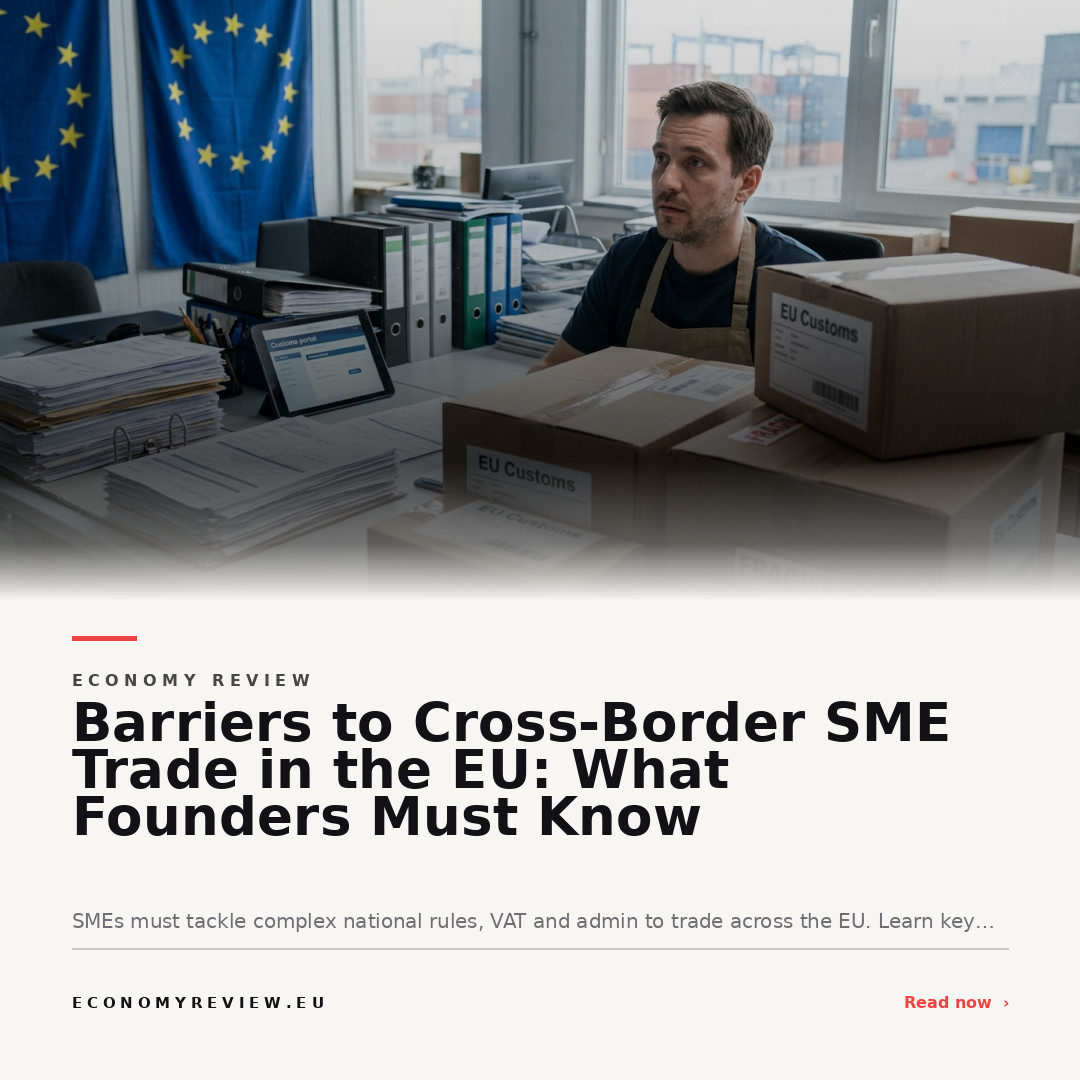
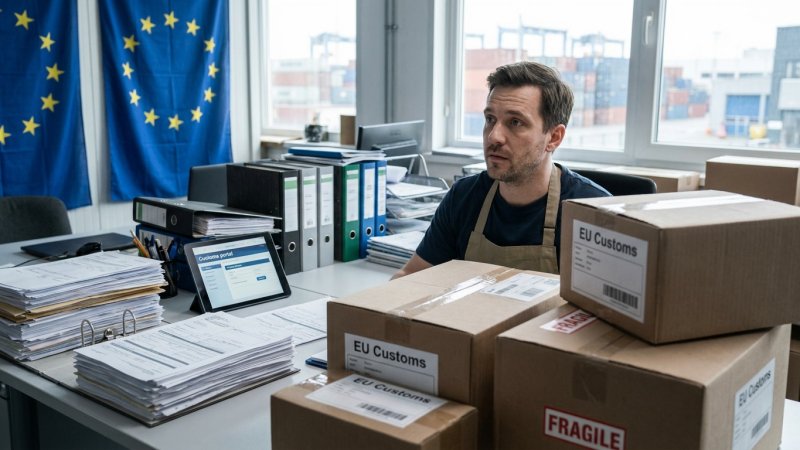
Everyday paperwork and logistics still slow SME expansion. Examples include complex customs clearance, extra product certifications, and different national rules for shipping or product transport. Digital service providers face fragmented administrative procedures like varying e-ID requirements or documentation standards, sometimes requiring official translations or even in-person validation.[3]
Goods vs Services: What Changes Across Borders?
The nature of cross-border business—selling goods versus providing services—substantially alters the regulatory and administrative landscape. Goods exporters face product testing, conformity assessment, and local packaging rules; service providers may need authorisation, have qualifications recognised, or gain sector-specific licences. B2C sales require additional consumer-focused adaptations, including product information in the local language and compliance with local customer rights. B2B dealings may demand careful attention to contractual obligations under different legal systems.
Typical Problems Encountered by SMEs
A 2023 survey highlighted that 65% of SMEs reported struggling with at least one major barrier when trading across EU borders, most commonly citing regulatory inconsistencies and VAT complexity.[3] Navigating these hurdles demands considerable time, money, and energy—resources that SMEs, unlike large firms, cannot always spare, often deterring expansion ambitions or slowing growth.
Recent Developments in Supporting Cross-Border SME Trade
As of 2023, the European Commission and business groups continue to promote greater rule harmonisation, expand single market digital tools, and refine VAT simplification measures. However, implementation gaps between countries remain persistent.[3] While reforms like the VAT OSS and the partial rollout of a cross-border SME VAT regime offer improvement, adoption and real benefit for founders depend on evolving national rules. This makes expert local guidance and up-to-date regulatory checking crucial for any cross-border market move.
A Founder’s Checklist Before Entering a New EU Market
Before launching in a new EU country, founders should review: local consumer law; VAT registration and distance selling thresholds; potential barriers to payments processing; requirements for product standards, labels, and packaging; and, for services, recognition of professional qualifications or sector-specific permits. Early advice from local consultants or chambers of commerce can reduce risk and speed up entry.[2] Careful checks ensure cost predictability, legal compliance, and the avoidance of launch delays or regulatory sanctions.
Conclusion: Preparing for Success in Cross-Border EU Trade
While the EU Single Market promises integrated expansion opportunities, SMEs continue to encounter complex and fragmented realities in both regulation and daily practice. Founders who take time to understand and address these barriers—through research, compliance checks, and the use of evolving EU support measures—will build the resilience and know-how needed for sustainable, cross-border business growth.
Sources
[2] Barriers to cross-border e-commerce in the EU (Ecommerce Europe, 2022-11-01)
[3] Barriers to SME cross-border trade within the EU still remain, survey finds (Euractiv, 2023-04-20)