
In today's rapidly evolving business landscape, companies must constantly adapt to emerging work trends. As of August 2026, the debate around home office versus workation is central for organizations aiming to maximize performance, employee satisfaction, and competitive advantage. Companies seeking to attract and retain talent, foster innovation, and optimize productivity are increasingly examining which remote work models truly deliver the greatest benefits. In essence, while both home office and workation provide flexibility beyond traditional office boundaries, their impacts on businesses differ significantly in practice and should be chosen strategically to align with company goals.
- Home office boosts employee well-being and productivity through familiar environments.
- Workation promises creativity and retention but requires careful planning and clear rules.
- Companies must match their culture, compliance needs, and tech stack to the chosen model for optimal benefits.
Defining Home Office and Workation in 2026
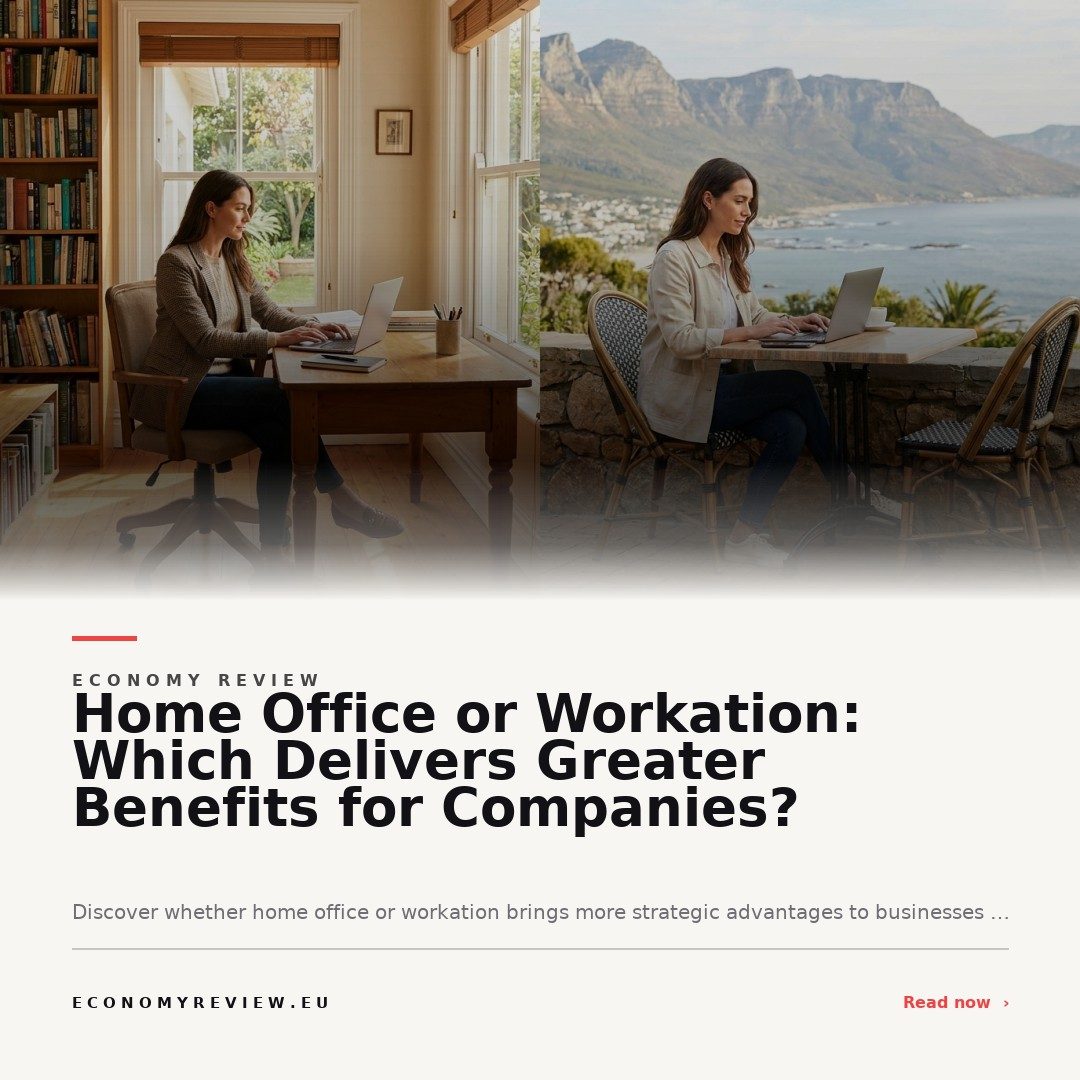
Home office refers to employees performing their duties from their own homes, enabled by digital communication and collaboration tools. The model offers stability, minimal setup costs for the worker, and familiar, distraction-free environments. By contrast, workation combines work and vacation, allowing employees to operate from different locations—temporary, often inspiring settings—while fulfilling their job responsibilities. This model is more fluid, with employees potentially working from another country, a beachside rental, or even on the move. Each approach reflects a distinct philosophy on how and where work can be performed most effectively.
Business Benefits of Home Office
For companies, the home office model offers several concrete benefits. Chief among them is increased productivity for roles allowing deep focus or requiring minimal in-person interaction. By granting employees autonomy over their workflow, companies often see a boost in engagement and job satisfaction. Moreover, operational costs can be reduced—less office space, lower utility bills, and potentially fewer geographic constraints on hiring talent. For many firms, especially in knowledge-driven sectors, these savings and the resulting ability to recruit from a broader labor market are strategically significant. Nevertheless, maintaining a consistent corporate culture and monitoring performance can be challenging if not proactively addressed.


The Strategic Appeal of Workation
Workation is an emerging trend in 2026, catching the interest of both management and staff seeking fresh inspiration. The key advantage for businesses lies in unlocking creativity and improving talent retention, especially among younger, travel-oriented professionals. By supporting workations, companies position themselves as flexible, forward-thinking employers—vital for employer branding. Additionally, under the right circumstances, employees can return energized, offering new perspectives. However, the model requires extra attention to legal, security, and coordination issues, as employees may work from different time zones or even across international borders. Without a clear policy, workation can disrupt workflows or complicate team cohesion.
How to Decide: Aligning Models with Company Goals
The decision between home office and workation should be rooted in a company’s mission, culture, and operational context. Home office proves particularly advantageous for organizations emphasizing stable outputs and routine collaboration. Its effectiveness depends on the maturity of internal communication systems and well-defined performance metrics. Workation, on the other hand, aligns with cultures that highly value autonomy, trust, and project-based work. It tends to thrive in sectors prioritizing creative outputs and where work is inherently asynchronous. Leadership must assess not just employee preferences but the potential impact on client relationships, internal communication, and compliance frameworks when going beyond national borders.
Key Considerations: Legal, Security, and Technology
Any shift towards flexible work models comes with non-negligible compliance risks. For home office, companies must ensure proper data protection at employees’ residences and the fulfillment of labor law obligations regarding working hours and ergonomics. Workation increases complexity, involving cross-border legal questions, such as tax residency, social security contributions, and visa requirements. The technical foundation, including secure access to company resources and robust collaboration platforms, is fundamental for both models. Organizations must provide clear guidelines and proactive IT support to prevent security breaches and workflow interruptions.
Impact on Team Culture and Collaboration
Maintaining a vibrant corporate culture is a persistent challenge in remote-first setups. Home office arrangements sometimes lead to siloed teams, with spontaneous exchanges and informal learning hampered. Workation magnifies these risks due to added geographic and temporal distance. Leaders are increasingly implementing digital rituals—such as regular video check-ins and virtual socials—to proactively foster cohesion. Transparent communication and explicit expectations help bridge ambiguity and reduce misunderstanding, safeguarding the shared sense of mission.
Productivity, Creativity, and Employee Well-Being
Data from early adopters suggest home office setups can improve productivity by reducing commute times and enabling custom work environments. However, risks such as isolation and blurred work-life boundaries persist. Workation can reinvigorate employees, lower stress, and encourage creative thinking due to the change of scenery. These benefits only materialize if clear rules for availability, performance, and data security are set and respected. For both models, leadership engagement and active support for well-being practices are crucial for maximizing positive outcomes.
Comparing Cost and ROI for Companies
Home office solutions tend to generate cost savings on facilities and fixed expenses, which can be redirected to digital infrastructure or employee benefits. The ROI becomes even clearer in high-wage, metropolitan areas where office costs are prohibitive. Workation programs often involve indirect costs—such as travel stipends, international insurance, or short-term leasing of co-working space—but can have outsized effects on recruitment and retention when well targeted. Carefully measured, these investments often yield higher productivity, lower turnover, and an enhanced company image.
Integrating Hybrid Models for Maximum Flexibility
The future of work in 2026 is unlikely to be either/or. Many organizations are now embracing hybrid models combining both home office and the occasional workation. This enables employees to reap the benefits of stability and novelty, while businesses can flexibly adapt to changing market and talent realities. By piloting experiments, gathering feedback, and continuously refining policies, companies can shape flexible arrangements that fit both organizational goals and workforce needs. Such adaptability will be crucial for companies aiming to remain resilient and innovative in years to come.
Conclusion: Tailoring Work Models for Success
Ultimately, the choice between home office and workation should reflect each company's unique culture, business model, and strategic priorities. Leadership must weigh the tangible operational advantages against intangible cultural and compliance challenges. With clear intentions, robust technological support, and an open dialogue with teams, companies have much to gain from adopting the right mix of flexible work practices. As new work trends emerge, forward-thinking firms will focus not on choosing one model over the other, but on leveraging both to attract top talent and drive sustainable success.