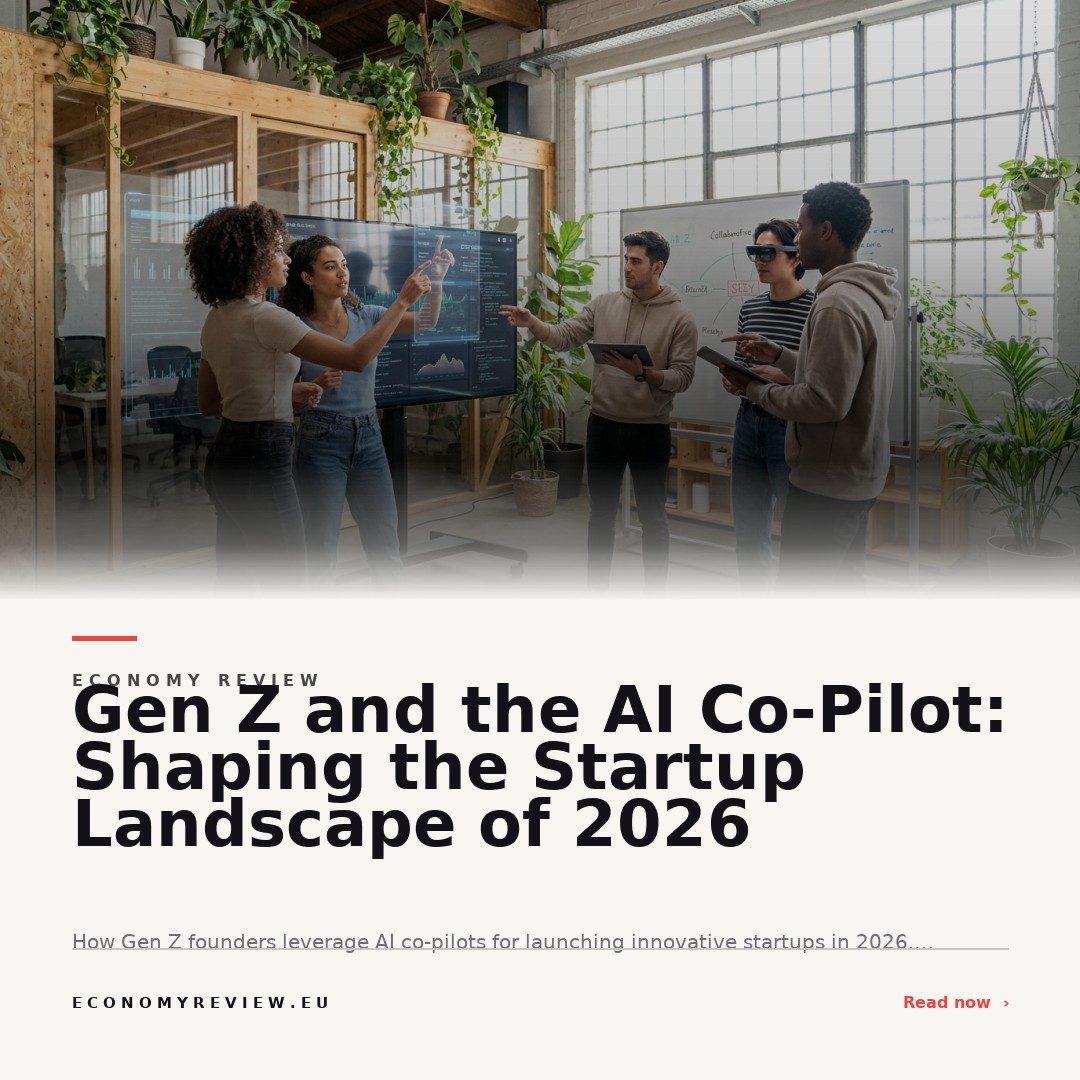

Gen Z founders in 2026 are redefining the entrepreneurial landscape by seamlessly integrating AI co-pilots into the heart of startup creation. This new generation is distinguished by its digital savvy, adaptability, and strong drive to solve real-world problems efficiently. With artificial intelligence no longer just a tool but a true startup partner, Gen Z entrepreneurs are creating leaner, faster, and more scalable businesses, shaking up traditional models right from the inception phase.
- AI co-pilots empower Gen Z founders to streamline ideation and execution, cutting down startup launch cycles.
- This generation prioritizes flexibility, digital fluency, and problem-solving with technology at every stage.
- Challenges remain: AI skills gaps, ethical considerations, and navigating a rapidly shifting business landscape.
How Gen Z Leverages AI to Transform Entrepreneurship
The defining trait of Gen Z entrepreneurs is their intuitive relationship with technology. For many, AI co-pilots like advanced language models and workflow assistants aren't optional— they're foundational collaborators, supporting everything from initial market research to product iteration and customer engagement. These AI systems help founders find business niches more swiftly, automate repetitive tasks, and even develop early versions of products or services before scaling up with human teams. The result is a surge of tech-driven startups focused on efficiency, agility, and customer-centricity.
Startup Ideation and Execution 2.0: The Role of AI Co-Pilots
Inside today’s startups, the traditional brainstorming and business planning process has evolved. Gen Z founders often begin by feeding market data, customer trends, and even their own rough ideas into AI tools, which rapidly generate business models, cost forecasts, or marketing angles. These AI co-pilots bring strengths in fast data synthesis, scenario analysis, and personalization. As a result, the initial phases of startup creation—once considered labor-intensive and high-risk—now run with remarkable speed, accuracy, and creativity.


This AI partnership isn't just about saving time. It fundamentally shifts how founders approach trial and error. With machine learning models able to test hypotheses and simulate outcomes, young entrepreneurs can pivot much faster when products miss the mark. The iterative culture of Gen Z startups is thus supercharged by a digital „team member” that never tires or slows down.
Values-Driven Innovation: More Than Just Technology
While the technical edge is obvious, Gen Z founders are also notable for focusing on purpose-driven entrepreneurship. AI tools allow them to explore sustainable business practices, socially responsible solutions, and ethical product design at scale. This generation’s startups often build mission statements into their core strategy from day one, using AI for impact assessment and as a feedback loop for measuring social value. The result: a wave of new businesses that aim not only to disrupt markets but also to contribute positively to communities and the environment.
Education, Funding, and Networks: Gen Z’s New Startup Ecosystem
Crucially, the embrace of AI is reflected in how Gen Z accesses knowledge and capital. Instead of traditional business schools or exclusive accelerator programs, many young founders self-educate through open online courses, peer-driven learning, and AI-guided tutorials. Digital communities and forums play a central role, as does a preference for decentralized, often global collaboration.
This also extends to funding strategies. New forms of funding—ranging from AI-matched grant databases to automated investor outreach—lower the barriers for first-time founders to secure early capital, making entrepreneurship more accessible. For insights on modern startup funding, see Startups und Finanzierung 2026: So gelingt der Weg zum Wachstum and Finanzierungsmöglichkeiten für Start-ups: Wege zum nachhaltigen Wachstum.
Core Challenges: Skill Gaps, Oversaturation, and Ethics
Despite these advantages, Gen Z founders face significant hurdles. The rapid proliferation of AI-driven startups can lead to crowded markets and product oversaturation, making long-term differentiation challenging. In addition, not every founder possesses deep technical expertise in AI, which may hinder those unable to effectively "collaborate" with their co-pilot software. Skill gaps in critical data interpretation, AI prompt engineering, or ethical risk assessment continue to be a bottleneck for many bright ideas.
Ethical responsibilities are evolving just as fast as the technology. Gen Z's commitment to transparency and inclusivity is tested by biases in AI, data privacy questions, and the environmental impact of large-scale digital infrastructures. Founders must routinely audit their algorithms and prioritize responsible tech use to maintain trust and compliance.
Hybrid Work, Digital Sovereignty, and Broader Trends
The wider startup culture is also shifting. Flexible work models, championed by Gen Z, are now the norm in digitally-driven enterprises. The hybrid home-office revolution is closely linked, with AI tools making remote work seamless and collaborative. For more on these trends, consult Hybrides Homeoffice: Die neue Normalität der Arbeitswelt. On a broader policy level, discussions around digital sovereignty and the independence of European startups from global tech giants intersect directly with the strategies of Gen Z founders. See Digitale Souveränität in Europa: Wege zu mehr Selbstbestimmung und Unabhängigkeit for detailed insights.
The Future of Gen Z Entrepreneurship: What Lies Ahead?
Looking forward, Gen Z’s use of AI co-pilots is likely just the beginning of a broader digital transformation. As technologies advance and as the next entrepreneurial generation matures, the fusion of human creativity and machine intelligence will only deepen. It remains up to each founder to balance speed, ethics, and impact as they navigate an ever more complex business environment.
The story of Gen Z and their AI co-pilots offers valuable lessons for aspiring entrepreneurs, educators, and investors alike: adaptability, collaborative technology, and a strong value compass are now prerequisites for enduring startup success. The question for the years ahead: who will use these new tools most wisely to drive not just profits, but real positive change?