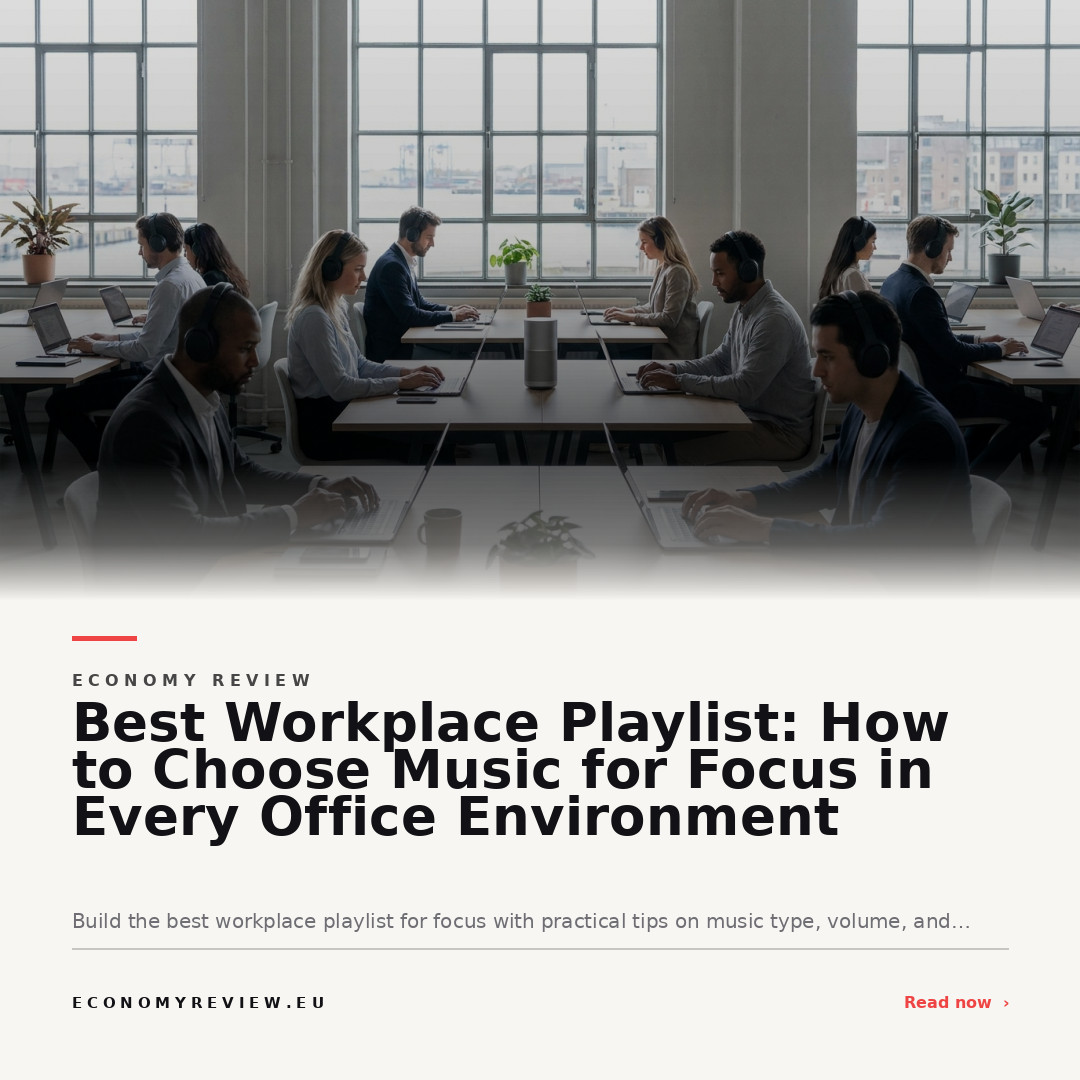

The best workplace playlist depends on the nature of the task, the office environment, and personal preferences. Instrumental music at low volume helps focus, but flexible, individual choices and the right setup are essential to boost productivity in shared spaces.
Finding the best workplace playlist is not about selecting a single genre for everyone. Rather, it's about matching music to the specific demands of the task, accommodating the office environment, and aligning with employees’ preferences. For work that requires concentration, instrumental music and thoughtful use of volume are especially effective. However, what works for one person might distract another, making adaptability crucial in finance and other focus-driven sectors.
- Instrumental, lyric-free music enhances focus for deep work tasks.
- Soft, moderate tempo tracks suit repetitive or routine jobs.
- Volume control and headphones support productivity in shared spaces.
- Allow for individual preferences and easy opt-outs.
- Refreshing playlists prevents listener fatigue.
What Makes a Workplace Playlist Work?
A workplace playlist works best when it balances productivity with comfort for everyone present. Research consistently shows that music’s impact on focus is highly individual. In analytical or finance-oriented jobs, lyric-free instrumental music—like classical or electronic—tends to reduce distractions and improve deep concentration [1]. This kind of playlist is particularly effective for tasks that demand high cognitive engagement, such as financial analysis or report preparation. At the same time, optimal playlists are those that do not interfere with colleagues’ work, especially in open-plan offices.
Choose Music by Task: Deep Focus, Routine Work and Creative Tasks
The type of work being performed should guide music selection. For deep work—activities requiring intense focus such as accounting or spreadsheet analysis—instrumental music without lyrics is usually preferable, as lyrics can compete with language-heavy processes in the brain [2]. For routine or repetitive tasks, upbeat tracks with a moderate tempo (around 60–90 beats per minute) can provide a subtle energy boost without being distracting. Creative or ideation tasks might benefit from more varied genres, but always at a low volume to avoid breaking colleagues' concentration.


Instrumental Music, Lyrics and Tempo: What to Consider
Instrumental tracks are generally recommended for analytical or detail-oriented tasks, while music with prominent lyrics should be reserved for less demanding routines. Lyrics can intrude on verbal thinking, so for finance teams—who often engage in reading, data processing, and writing—lyric-free ambient, classical, or electronic tracks are often ideal [1]. The tempo of music matters too: moderate tempo prevents drowsiness but doesn’t overwhelm. Mixing genres can help prevent listener fatigue, but aim to keep the overarching mood neutral in a professional environment with diverse preferences.
Set a Comfortable Volume and Listening Setup
Volume is a critical factor, particularly in shared offices. Music that is played too loudly or includes sudden changes in dynamics can disrupt focus and even cause annoyance among coworkers [4]. The ideal solution for workplaces is often personal headphones at a modest volume. This approach allows each employee to tailor their auditory environment to their own needs, reducing the likelihood of distraction for others [4].
Shared Office Playlists: Balance Preferences and Quiet
In open-plan offices or shared workspaces, collective playlists can foster a sense of team spirit but also risk conflict if not properly managed. Playlists with lyrics or wide mood swings can disturb colleagues, especially if tasks require concentration (as in finance). Open communication and agreed-upon office rules, such as predetermined volume limits or scheduled quiet periods, can help maintain harmony. Some team members may prefer silence; providing options like "headphone zones" or allowing clients to opt-out is recommended for inclusivity. Managers can create shared, neutral playlists but should encourage flexibility rather than require constant background audio.
How to Build and Refresh a Workplace Playlist
Building an effective office playlist is a process of iteration. Start with a selection of lyric-free, moderate-tempo tracks and invite team feedback. Keeping the playlist fresh by rotating genres, updating tracks periodically, and avoiding overplayed songs can stave off listener fatigue and maintain productivity [1]. Use feedback channels to solicit input while maintaining an overall neutral, professional atmosphere for shared spaces.
Workplace Playlist Tips for Finance and Accounting Teams
Finance and accounting professionals typically engage in tasks that require accuracy and sustained attention. Instrumental music at a low volume is especially well-suited for these environments, as it supports cognitive performance without introducing language distractions [1]. However, recent research points to the growing trend of personalized playlists and smart speakers with user-controlled settings that empower individuals to shape their auditory environment to their own tasks [2]. This approach recognizes both the diversity in listening preferences and the unique needs of numbers-driven roles.
Typical Problems
Common issues arise when music with lyrics or variable volume is played in shared spaces, which often leads to distraction—especially during important analyses or team meetings [4]. Balancing the variety of preferences can also be difficult. Some employees thrive in a silent workspace while others see improvement with background music. Therefore, it is essential to establish clear guidelines and provide opt-out options.
Recent Developments
Emerging trends include the use of personalized playlists and smart speakers that enable users to tailor their own soundscapes. These solutions offer adjustable volume and genre selection, allowing for greater individualization and higher productivity in diverse office settings [2]. Offices that embrace flexible audio policies—permitting both music and designated quiet zones—are finding increased employee satisfaction and fewer distractions as a result.
Conclusion: Tailoring the Best Playlist for Your Workspace
The best workplace playlist is one that fits the needs of both the team and the individual. While instrumental music at a moderate tempo and low volume is generally a reliable foundation for focused work—especially in finance—flexibility and choice are key. By accommodating differing preferences, providing ways to opt out, and regularly refreshing playlists, employers can foster both productivity and well-being in the office. As every team is unique, use research-backed starting points but rely on ongoing feedback to refine the workplace playlist for your group.
Sources
[1] Workplace Playlists: What’s the Best Music for Productivity? (FlexJobs, 2022-03-29)
[2] The Best Music for Productivity, According to Science (CNBC, 2023-09-25)
[4] The Best Music for Focus, According to Science (New York Times, 2022-10-05)