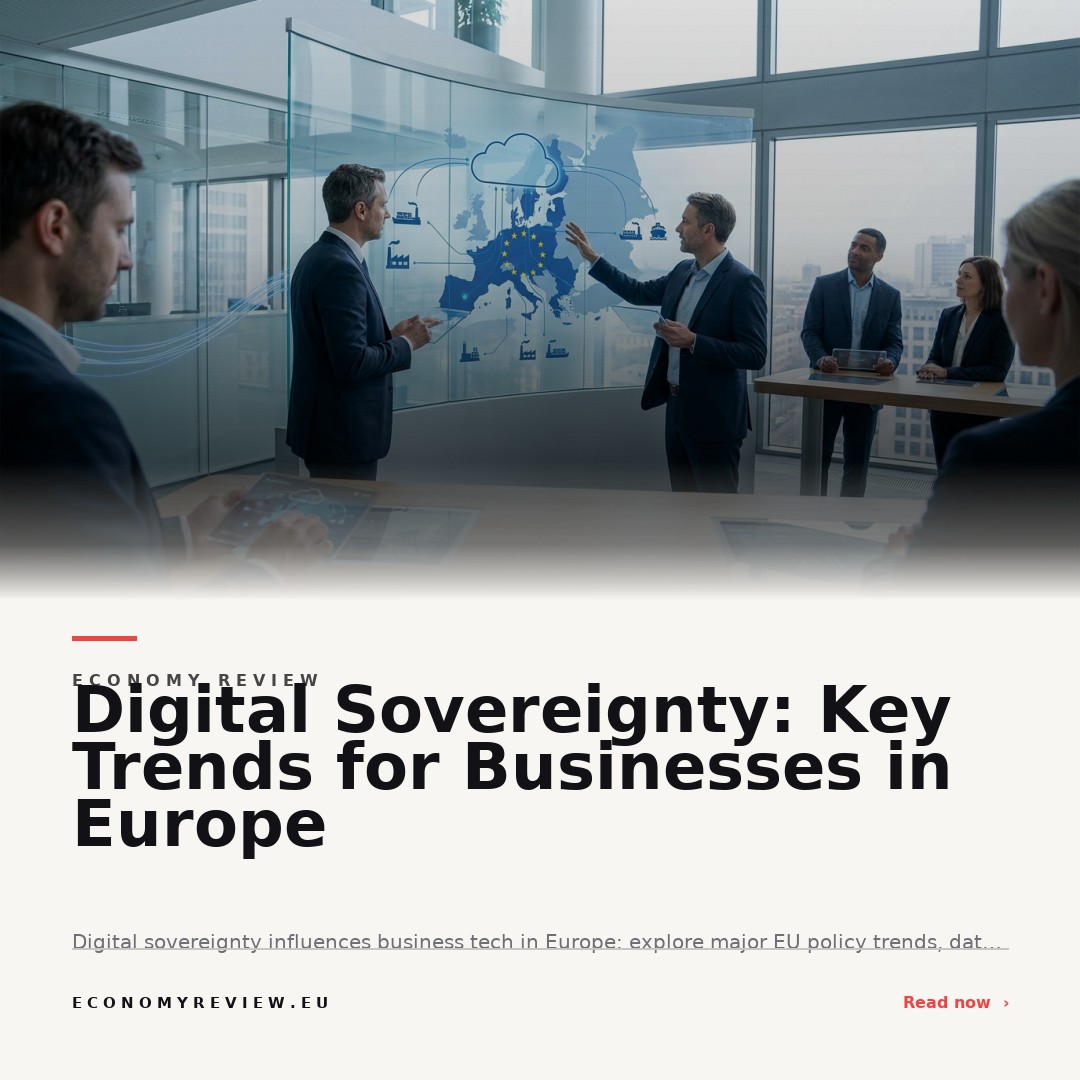

Digital sovereignty is reshaping European business by promoting autonomy, resilience, and technology choice through regulations like the DMA, DSA, and Data Act. Strategic autonomy seeks to strengthen control over digital assets without reverting to isolationism, impacting procurement, supply chains, and data management.
Digital sovereignty in Europe is the European Union’s initiative to empower businesses and citizens to independently control digital infrastructure, data, and technology. For companies operating in Europe, this paradigm requires adapting to a rapidly changing regulatory landscape while rethinking procurement, compliance, and IT strategies. EU digital sovereignty is not about isolation—it is about building strategic autonomy to increase resilience and reduce critical dependencies, all while keeping markets open. As of September 2026, EU businesses are navigating landmark rules and emerging trends that directly influence technology decisions, cloud adoption, and data management.
- Digital sovereignty focuses on EU control and autonomy in technology, data, and infrastructure.
- EU laws like the DMA, DSA, and Data Act guide cloud switching, data access, and market fairness.
- Businesses must evaluate technology relationships, compliance requirements, and strategic risks.
What digital sovereignty means for European businesses
Digital sovereignty for European businesses means the practical ability to choose, control, and govern their digital tools and data flows in compliance with EU law while ensuring operational flexibility and competitiveness. This does not require businesses to use only EU providers, but it does encourage boosting local capabilities, enhancing supply chain transparency, and securing critical digital resources. Recent geopolitical events and supply chain vulnerabilities have underscored the risks of overreliance on foreign technology, especially in areas like the cloud and semiconductors [1][4]. Today’s leaders must consider how new obligations affect their technology procurement, contractual negotiations, and overall strategic direction.
The shift toward sovereign cloud and AI
The EU’s move toward sovereign cloud and AI is characterized by securing critical infrastructure, protecting sensitive data, and enabling innovation within a European framework. High-profile EU-backed projects, such as GAIA-X, are developing federated, standards-based cloud services to reduce reliance on non-European providers. The proposed Cloud and AI Development Act (CADA) seeks to triple the EU’s data center capacity within five to seven years—a reflection of ambitions to strengthen Europe’s digital backbone. Sovereignty in this context is defined not just by data location but by operational control, legal compliance, and agility in responding to risks [1][2].


EU policy developments shaping the market
Recent regulatory reforms profoundly affect digital markets. The Digital Markets Act (DMA) and Digital Services Act (DSA) set out new requirements for so-called gatekeepers—large digital platforms—to foster competition and protect users. The Data Governance Act and the Data Act are designed to ease data sharing, facilitate switching between cloud providers, and safeguard non-personal data against unlawful international transfers. These rules collectively improve transparency, help businesses avoid lock-in, and align operational practices with evolving European standards [1][2][5]. Enforcement has intensified since 2024, especially regarding cloud portability and chip investments, making timely compliance crucial for companies [1].
Data portability, access and control
At the core of digital sovereignty is the concept of data access and portability. The EU Data Act, effective from September 2025, imposes clear rules to ensure cloud switching and prevents vendors from unfairly restricting the movement of non-personal data. The legislation also limits the risk of unlawful data transfers outside the EU, which is vital for businesses sensitive to jurisdictional and privacy concerns. These frameworks are intended to foster business agility, continuity, and legal certainty, especially for SME and cross-border operations with complex compliance needs.
Open source and resilient technology supply chains
Recognizing open source as an enabler of digital sovereignty, the EU actively encourages adoption of open-source technologies and frameworks. Open-source solutions support supply chain transparency, lessen single-vendor lock-in, and stimulate innovation that is both regional and secure. A parallel emphasis remains on robust cybersecurity, acknowledging that autonomy must not come at the cost of increased vulnerabilities. With market dominance by US and Chinese platforms persisting, the push for open, sovereign alternatives is viewed as both a competitive and political imperative for Europe [4][5].
Common challenges
Despite regulatory ambition and investment, structural obstacles endure. Europe continues to struggle in scaling up global technology leaders, while dependence on US-based platforms for key areas like cloud, digital advertising, and social media remains strong [4]. Further, differences in national implementation and compliance complexity across the EU fragment the regulatory landscape, creating barriers for firms operating in several member states [5]. These issues can limit the effectiveness of digital sovereignty policies and place an additional burden on cross-border businesses.
Recent developments
Since 2024, the EU has accelerated enforcement of new rules, expanded investment in semiconductor manufacturing, and grown European cloud ecosystems like GAIA-X [1]. These developments signal a practical turn in digital sovereignty, with real-world impact on procurement, provider selection, and risk management for businesses. By tying regulatory compliance to technology investment and operational planning, digital sovereignty has shifted from a policy vision to an active design principle for Europe’s digital economy.
What the trends mean for European companies
European managers and founders are now called to integrate digital sovereignty into every stage of technology procurement and strategic planning. Key considerations include the sensitivity of workloads, the physical and legal location of data, the degree of operational and contractual control, and exit strategies for avoiding lock-in. EU procurement is placing increasing value on local assurances and compliance, but sovereignty does not demand exclusive use of EU experts or vendors. Instead, it challenges companies to diversify, strengthen resilience, and pursue innovation through balanced international engagement [2][3].
How to assess digital-sovereignty requirements
Assessing your digital sovereignty needs extends beyond the location of a data center. Operational control, clarity of legal jurisdiction, the ability to switch providers without excessive cost or risk, and visibility into supply-chain partners are equally crucial. European SMEs and cross-border firms should prioritize these factors to mitigate lock-in, ensure compliance with upcoming rules, and protect operational flexibility [2][5]. Sovereignty is an ongoing exercise in risk management, requiring regular reassessment as the regulatory and technological environment evolves.
Conclusion: Staying resilient and competitive in Europe’s digital landscape
Digital sovereignty is now shaping how businesses across Europe procure technology, manage data, and safeguard long-term competitiveness. The EU’s approach—grounded in open markets but increasing regional autonomy—offers opportunity and challenge alike. Companies that proactively adjust to the new regulatory and technological terrain will be better positioned to innovate and thrive as digital sovereignty becomes an ever more central concern for the European economy.
Sources
[1] Digital sovereignty in Europe – trends for 2024 (European Parliament, 2024-01-17)
[2] Digital sovereignty in the EU: Key concepts, developments, and future challenges (Euractiv, 2023-09-26)
[3] Why Europe needs digital sovereignty now more than ever (Deutsche Welle (DW), 2023-10-26)
[4] Europe’s digital sovereignty and the global tech race (CSIS, 2023-04-28)
[5] EU, digital sovereignty and data governance: a European agenda for the digital age (Bertelsmann Stiftung, 2023-07-03)