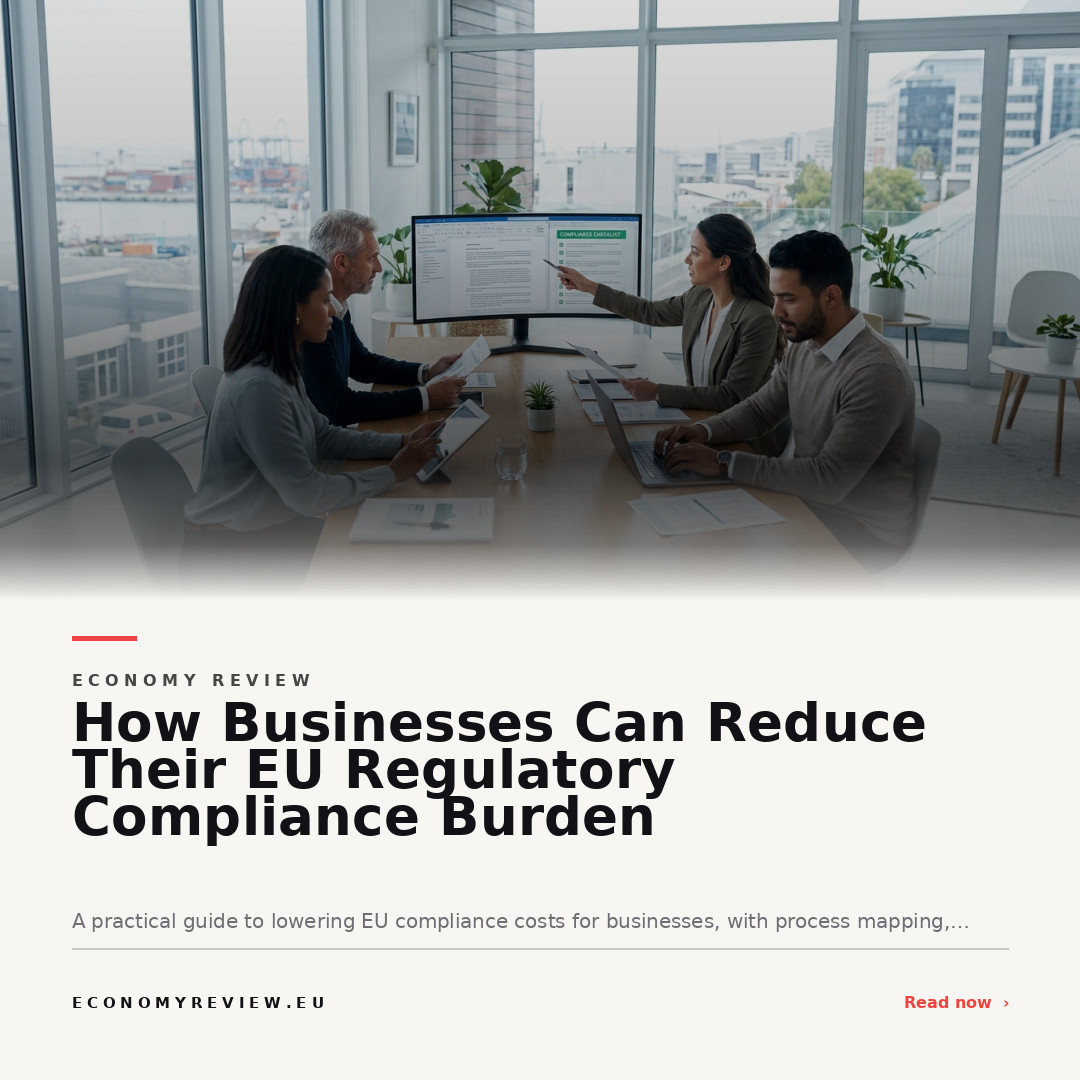

Businesses can reduce EU regulatory compliance burdens by systematically mapping relevant rules, automating reporting with digital tools, and seeking out proportional or simplified requirements. Centralizing compliance functions and monitoring for regulatory changes help minimize costs without compromising adherence.
Reducing the time and cost required to comply with EU regulatory requirements is a pressing priority for European businesses. By systematically mapping which EU and national laws apply, consolidating compliance processes, and deploying digital tools and process automation, organizations can significantly lower administrative burdens while ensuring ongoing regulatory adherence. The following guide explains concrete steps and latest approaches for managing these costs effectively.
- Systematic rule-mapping clarifies obligations and reveals available simplifications.
- Digital tools and automation reduce manual workload and improve compliance data quality.
- Proactive review of proportionality and simplified requirements leverages cost-saving opportunities.
Why EU compliance creates a burden for businesses
EU regulatory compliance places significant administrative and cost pressures on businesses, especially in finance and cross-border sectors. Requirements can range from detailed reporting obligations to extensive record-keeping and frequent regulatory updates, often layering EU-level rules atop specific national implementations. Fragmented internal processes and manual handling can amplify these burdens, making compliance both time intensive and expensive. Lack of real-time visibility into changing obligations can further lead to inefficient over-compliance or even late and risky compliance lapses, inflating operational costs unnecessarily [3].
Map the EU and national rules that apply
The first essential step toward effective compliance management is systematic rule-mapping—identifying precisely which EU and national regulations, directives, or laws apply to the business, specific units, and products. This approach helps organizations avoid applying unnecessary controls and reveals whether simplified or proportional requirements exist. Thorough mapping should include both directly applicable EU laws and national transpositions, with attention to sector- and activity-specific provisions. This clarification is especially crucial for businesses operating in multiple member states, as local overlays can introduce further nuances. Early mapping avoids both compliance gaps and costly over-reporting [3].


Consolidate reporting, data, and record-keeping
Redundant efforts across business units and fragmented data handling commonly inflate compliance costs. Centralizing and harmonizing compliance functions allow businesses to realize economies of scale, minimize regulatory inconsistencies, and reduce duplicative workloads. Shared data architecture—whether through centralized reporting platforms or unified document management—improves data quality and reduces risks of error or inconsistency. Clear governance over data access and reporting roles supports a more streamlined approach that can stand up to regulatory scrutiny and audit requirements.
Use digital tools and shared processes to reduce duplication
Implementing shared digital tools, including regulatory technology ('RegTech') platforms and automated workflows, has proven highly effective in minimizing manual reporting and reducing overall compliance costs. Automation specifically benefits tasks such as recurring regulatory submissions, data reconciliation, exception monitoring, and change tracking. Digital reporting solutions also support consistent application of controls, facilitate real-time data extraction from core systems, and contribute to a cleaner audit trail. The use of harmonized digital submission portals, increasingly supported by both regulators and industry groups, minimizes duplicate or inconsistent compliance filings and enhances efficiency [3].
Check proportionality, thresholds, and simplified requirements
Many EU rules incorporate proportionality measures, thresholds, or simplified requirements—especially for SMEs or certain low-risk activities. Systematic rule-mapping exposes opportunities such as reduced reporting frequency, aggregate disclosures, or streamlined record-keeping. Eligibility for these simplifications depends on entity size, activity type, and business model. Businesses must carefully verify current legal status, application dates, and thresholds for each relevant reform before claiming an exemption or simplified pathway. Examples include SME-specific exemptions in sustainability reporting standards and sector-specific supervisory reductions [3].
Finance-specific opportunities: sustainability, tax, and supervisory reporting
Within finance, opportunities to reduce compliance burdens are closely linked to recent and forthcoming changes in sustainability (CSRD, ESRS, VSME standard), tax (ATAD, Pillar Two), and supervisory (EBA reporting) frameworks. The 'once-only principle' and pilot projects for digital tax and sustainability reporting are intended to cut duplicate filing and minimize disruption [3]. However, it is critical to distinguish between new proposals and rules actually in force, as the applicability, thresholds, and timelines are still evolving. Finance teams should continuously monitor developments and consult competent authorities to ensure they leverage all available simplifications without overlooking any obligations.
Build controls that preserve compliance while cutting cost
Effective compliance cost reduction requires controls strong enough to prevent breaches but lean enough to avoid unnecessary overhead. Embedding compliance-by-design in core business processes, automating documentation generation, and keeping a clear audit trail ensure that cost-saving measures do not erode the robustness of compliance frameworks. Regular compliance reviews, collaborative forums with internal audit or risk teams, and targeted training further optimize controls with cost efficiency in mind.
Typical problems
Businesses commonly face inadequate visibility of rapidly evolving EU and national rules, which can trigger late compliance efforts or force redundant reporting and excessive record-keeping [3]. Other frequent problems include fragmented internal processes and heavy reliance on manual intervention, leading to both inefficiency and increased risk of errors. Addressing these pain points through systematic process review and digitalization delivers tangible savings and stronger control.
Recent developments
Over 2022–2023, the EU has intensified its legislative push for digital supervision and reporting, including pilot initiatives in the financial sector to adopt digital compliance tools [3]. Regulators and industry participants are also increasingly aligned on the value of harmonized digital submission platforms, with early experiences indicating meaningful reduction in administrative duplication and paperwork. Such trends show a clear path forward for businesses seeking to modernize compliance practices in line with evolving expectations.
Review changes and measure savings over time
Continuous monitoring for regulatory updates enables organizations to pre-empt costly last-minute changes and keep compliance processes current. Businesses should systematically track changes to both EU and national rules—and review the performance of compliance streamlining efforts at regular intervals—to quantify savings in time and budget, adjust controls, and identify additional efficiency gains. A proactive, data-driven approach is key to sustaining a lower compliance burden over the long term.
Conclusion: A practical roadmap for ongoing optimization
European businesses face real cost pressures and complexity in meeting EU compliance, but these burdens are not fixed. By adopting a systematic approach—mapping applicable rules, consolidating processes, deploying digital tools, and seeking available proportional reforms—organizations can materially reduce administrative burdens while maintaining robust control frameworks. Continual process review and close attention to changes in both EU laws and national overlays ensure that the compliance function evolves as efficiently as possible. Businesses that invest in these capabilities position themselves to adapt cost-effectively to the ongoing regulatory flux in the EU landscape.
Sources
[3] Digital Regulation: Reducing the Burden of EU Compliance (European Parliament, 2022-05-01)