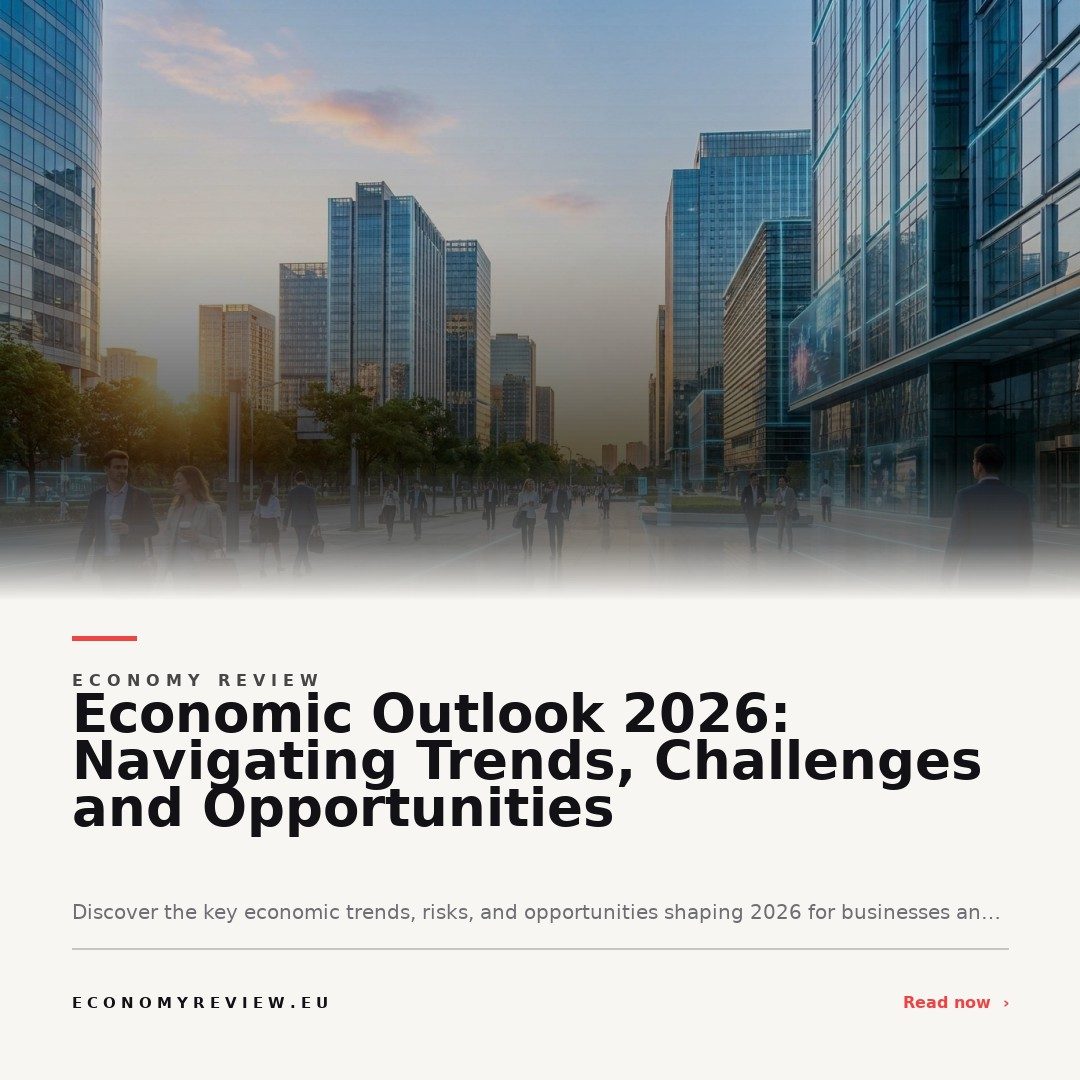

The year 2026 stands at the threshold of substantial economic transformation, bringing both complex challenges and rewarding opportunities. The global and regional economic landscapes are being redefined by shifting market demands, technological innovation, and evolving regulations. Businesses and investors must adapt proactively: underlying currents such as increased digitalization, regulatory overhaul, and changing trade dynamics will determine who thrives and who falters. This article provides a comprehensive, forward-looking analysis of the critical economic trends defining 2026, highlights key risks, and points to actionable prospects for strategic growth.
- Technological innovation is reshaping economic activity and labor markets worldwide.
- Regulatory changes in areas like cybersecurity and data protection increase both compliance costs and resilience.
- Trade policies and new tariffs are shifting the balance for exporters and supply chains.
- Climate considerations and sustainability have become core to risk and opportunity evaluations.
- Resilience and adaptability are the most valuable assets for businesses facing uncertainty.
Technological Advancement as a Growth Driver
In 2026, artificial intelligence, automation, and data analytics continue to accelerate productivity, foster innovation, and give rise to entirely new business models. The rapid integration of emerging technologies is not only seen among global corporations but increasingly among small and medium-sized enterprises, especially in regions such as Central Europe and Southeast Asia. Organizations focusing on digital transformation gain a tangible competitive edge, leveraging AI for everything from predictive analytics to enhanced customer experiences. Businesses are investing in upskilling their workforce and updating IT infrastructure to remain agile. For a deeper dive into the practical applications and concrete opportunities of artificial intelligence, our in-depth overview of AI potentials and applications provides valuable context.
Regulatory Environment: New Obligations, New Resilience
2026 marks the widespread implementation of new regulatory frameworks, particularly in cybersecurity and compliance. Europe’s NIS 2 Directive imposes stricter requirements for digital infrastructure and operational security across sectors. Companies operating in Austria, for example, need to be proactive in compliance management, making security and risk management central to their strategies. While compliance introduces additional costs, it also creates more resilient organizations with a competitive advantage in trust and reliability. More information is available in our article on NIS 2 in Austria.


Trade and Tariff Shifts: Winners, Losers, and the Case for Strategic Diversification
Global trade relations in 2026 remain dynamic, with new tariffs continuing to shape global supply chains and alter competitive positions. Exporters must navigate not just tariffs, but also shifting consumer demands and changing regulatory landscapes in target markets. Strategic diversification—both in terms of export markets and supply sources—has become essential to absorb shocks and exploit emerging opportunities. For a detailed examination of which sectors have benefited or lost out under the new regime, see our neutral overview of tariff impacts in 2026.
Labor Markets and Taxation: Increasing Digitalization and Automation
Digital employment platforms and the expansion of remote work remain defining features in 2026. This has led to a broader adoption of streamlined, digital tax administration. In Austria and across many EU countries, online tax return systems are now the norm, greatly reducing administrative burdens. Employers and employees alike are adjusting to more flexible work arrangements and evolving legal frameworks tailored to digital-first workplaces. Guidance for individuals and businesses adjusting to digital tax processes in Austria can be found in our overview of digital tax platforms.
Sustainability as a Core Consideration
Environmental sustainability is no longer a peripheral concern but has become a central element in economic and investment decision-making. Businesses face greater pressure from both regulators and consumers to account for their carbon footprint, adopt sustainable sourcing, and contribute to broader decarbonization goals. Those that build sustainability into their strategy are better positioned to attract investment, secure market share, and comply with new ESG standards.
Risk Landscape: Resilience and Preparedness
Economic uncertainty persists in 2026, fueled by fragmented supply chains, rising geopolitical tensions in select regions, and the persistent risk of economic shocks. The most successful organizations are those that have built robust risk management systems and established adaptable business models. Agility is essential, allowing firms to pivot swiftly in response to volatility—be it market fluctuations, technological disruption, or regulatory change.
Opportunities in Transformation
Among the transformation processes underway, strategic innovation, international collaboration, and digital upskilling have established themselves as proven pathways to growth. Companies willing to invest in emerging markets, diversify their offerings, and cultivate agile corporate cultures are better equipped to benefit from recovery waves and avoid stagnation. Cross-sector partnerships and openness to new business models further unlock economic potential in uncertain times.
Key Challenges on the Horizon
The key challenges heading into 2026 include talent shortages, tighter regulatory scrutiny, and intense competition for technological leadership. Navigating these issues requires a proactive stance: sustained investment in workforce development, targeted compliance initiatives, and the integration of advanced technologies at every level of the organization.
Current Developments in 2026
The first half of 2026 has seen the continued expansion of AI-driven automation, an uptick in regulatory enforcement across European markets, and a series of new trade agreements shifting global supply chains. Companies must track these developments closely to respond effectively to short-term shocks while remaining aligned with long-term strategic goals. Keeping abreast of technological, regulatory, and market shifts is the surest way to remain competitive.
Conclusion: A Roadmap for the Future
2026 offers a mixed picture—uncertainty persists, but so do opportunities for organizations that act decisively and adapt with purpose. Those best positioned for success will be the ones who combine technological agility, compliance, and forward-looking sustainability strategies. The year stands to reward resilience, innovation, and strategic foresight. What strategic moves will your organization take to turn these possibilities into tangible results? The answer to this question will shape the economic winners of 2026 and beyond.