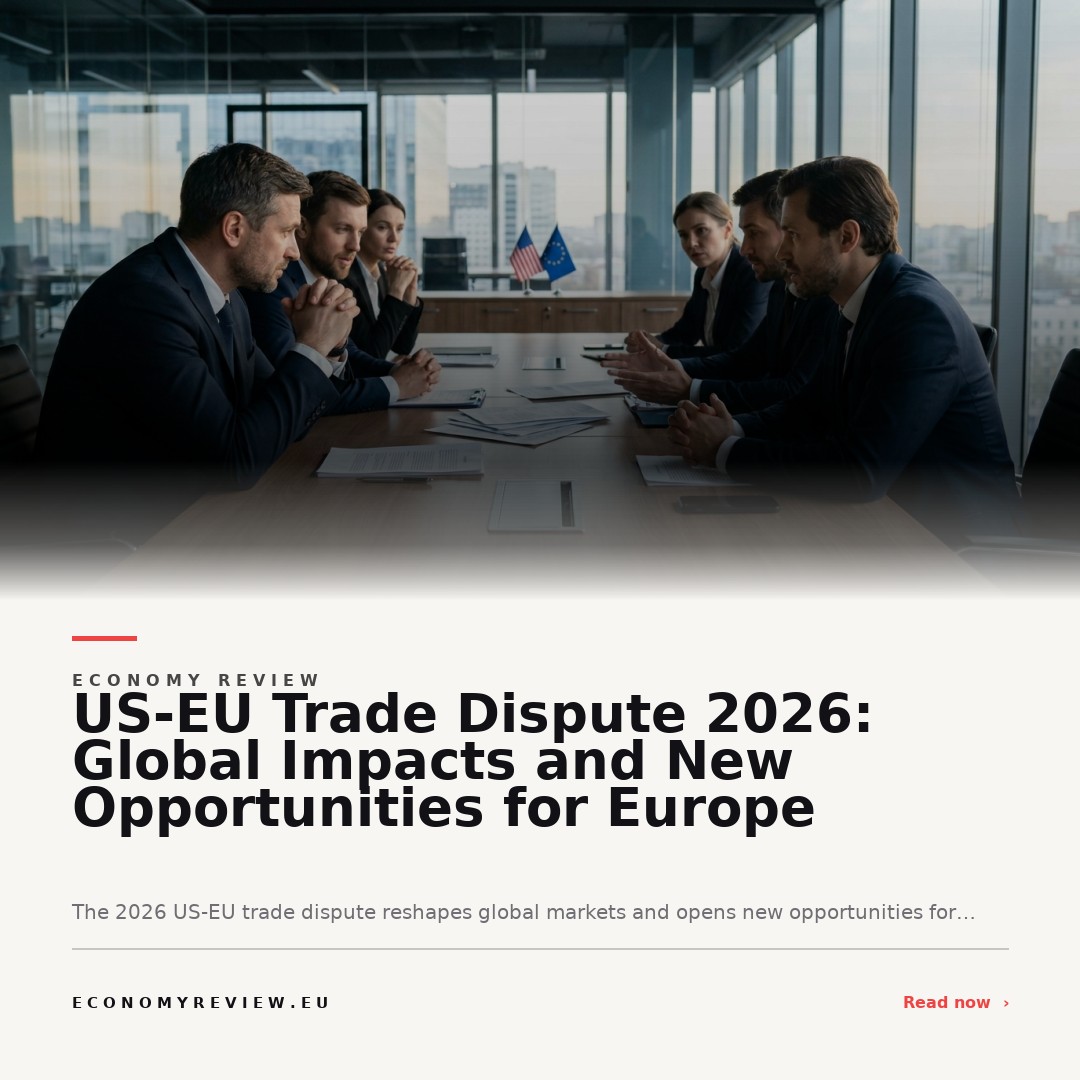

The US-EU trade dispute in 2026 is altering global trade flows, challenging established market dynamics but also creating substantial opportunities for European businesses to reposition themselves. Strategic adaptation could help Europe benefit amid uncertainty.
The US-EU trade dispute in 2026 is fundamentally shifting global market dynamics, creating both significant challenges and strategic opportunities for Europe and its businesses. As sanctions and new tariffs redefine trade routes and business models, Europe stands at a crossroads: adaptation will determine whether this standoff hampers progress or catalyzes innovation and growth.
- The dispute is redrawing trade patterns and regulatory environments across continents.
- European sectors dependent on transatlantic exchange face risks, but emerging sectors may benefit.
- Adaptation and strategic repositioning are vital for companies to seize new market openings.
What is the 2026 US-EU Trade Dispute?
The US-EU trade dispute in 2026 refers to a series of escalating economic policies, tariffs, and barriers implemented by the United States and the European Union following disagreements on digital services taxation, environmental standards, and supply chain security. Unlike prior disputes, the 2026 conflict is characterized by its scope, including not only industrial goods but also digital products and critical raw materials. This standoff is not a mere continuation of past tariff skirmishes; it reflects structural tensions over digital sovereignty, climate strategy, and the regulation of multi-national tech and energy companies.
Why Did This Dispute Arise?
The trade friction between the US and the EU intensified throughout 2025 and 2026 due to divergent regulations on data flows, green industrial policy, and corporate taxation. Tensions over the Digital Markets Act and competing approaches to subsidies for technology and clean energy created the backdrop for tariff implementations and non-tariff barriers. The US's increased focus on reshoring supply chains clashed with EU policy priorities in sustainability and digital governance, triggering retaliatory measures and heightened market uncertainty.


How Are Global Trade Flows Changing?
With new tariffs in place, companies on both sides of the Atlantic face higher operational costs and longer lead times. Global supply chains, which once depended on stable US-EU routes, are fragmenting as firms seek alternatives in Asia, South America, and within Europe itself. Trading partners are recalibrating alliances, and multinationals are reassessing production locations to circumvent barriers and mitigate risks. Smaller firms, in particular, face pressure to diversify sources and markets swiftly, often requiring significant logistical and regulatory adaptation.
Impacts on European Industries: Risks and Possibilities
Traditional export-heavy sectors such as automotive and machinery are most exposed to the dispute’s immediate hazards, with delayed shipments and decreased competitiveness in the US market. Conversely, European technology, green energy, and digital services companies may benefit as the EU invests in domestic value chains and prioritizes intra-European collaboration. Companies able to leverage the EU’s harmonized digital and environmental regulations will find expansion opportunities in regions less affected by tariffs. Strategic alliances and supply localization are increasingly critical for resilience and growth.
Strategic Opportunities for European Businesses
Despite the disruption, the reshuffling of markets opens new avenues. European companies have a rare chance to take leadership in fields like sustainable manufacturing, cybersecurity, and cross-border digital services. As the EU accelerates investment in innovation and incentive programs for strategic industries, entrepreneurs and established firms alike can position themselves as global champions. Navigating new regulations also means unlocking fresh capital channels; for example, working with private investors can support rapid adaptation and market expansion.
Adapting to Regulatory Challenges and Opportunities
Businesses must now grapple with a fast-evolving regulatory landscape. The adoption of comprehensive cyber and environmental acts across the EU, like the EU Cyber Resilience Act and the expansion of the NIS2 regulation, introduces both compliance obligations and competitive advantages for firms well-prepared for these changes. Companies that proactively enhance their digital infrastructure and integrate sustainability into their operations can leverage these requirements as differentiators in global markets.
Navigating the New Labor Landscape
The disruption of established trade patterns is also reshaping labor markets. European workplaces are becoming more agile, with a renewed emphasis on digital literacy, remote work infrastructure, and adaptability. Hybrid work models, as discussed in contemporary workplace trends, are becoming essential to maintaining competitiveness and attracting global talent in this environment of uncertainty.
Financial and Investment Considerations
Shifting trade realities are impacting capital flows and investment patterns. European firms need to reassess financial strategies, from hedging currency risks to seeking partnerships with venture capital and private equity. Navigating financial volatility requires prudent risk management and a forward-looking approach to international expansion. Companies that innovate their financing models and aggressively pursue new investment sources will be better equipped for sustained growth.
What Should European Leaders and Policymakers Do?
Policymakers are called to act decisively, balancing short-term mitigation of trade shocks with long-term vision for European competitiveness. Coordinating support packages, facilitating access to new markets, and accelerating regulatory harmonization across the EU can cushion the immediate impact and lay groundwork for resilience. European institutions have a unique opportunity to strengthen continental supply chains and foster innovation ecosystems that reduce external dependencies.
Conclusion: Crisis, Catalyst, or Both?
The 2026 US-EU trade dispute is a stress test for Europe’s economic model, but also a catalyst for greater strategic autonomy and regional integration. The degree to which businesses and policymakers convert disruption into pragmatic advantage will define Europe’s position in the global economy for years to come. As the region confronts both risks and new horizons, adaptability and bold investment in innovation remain essential.