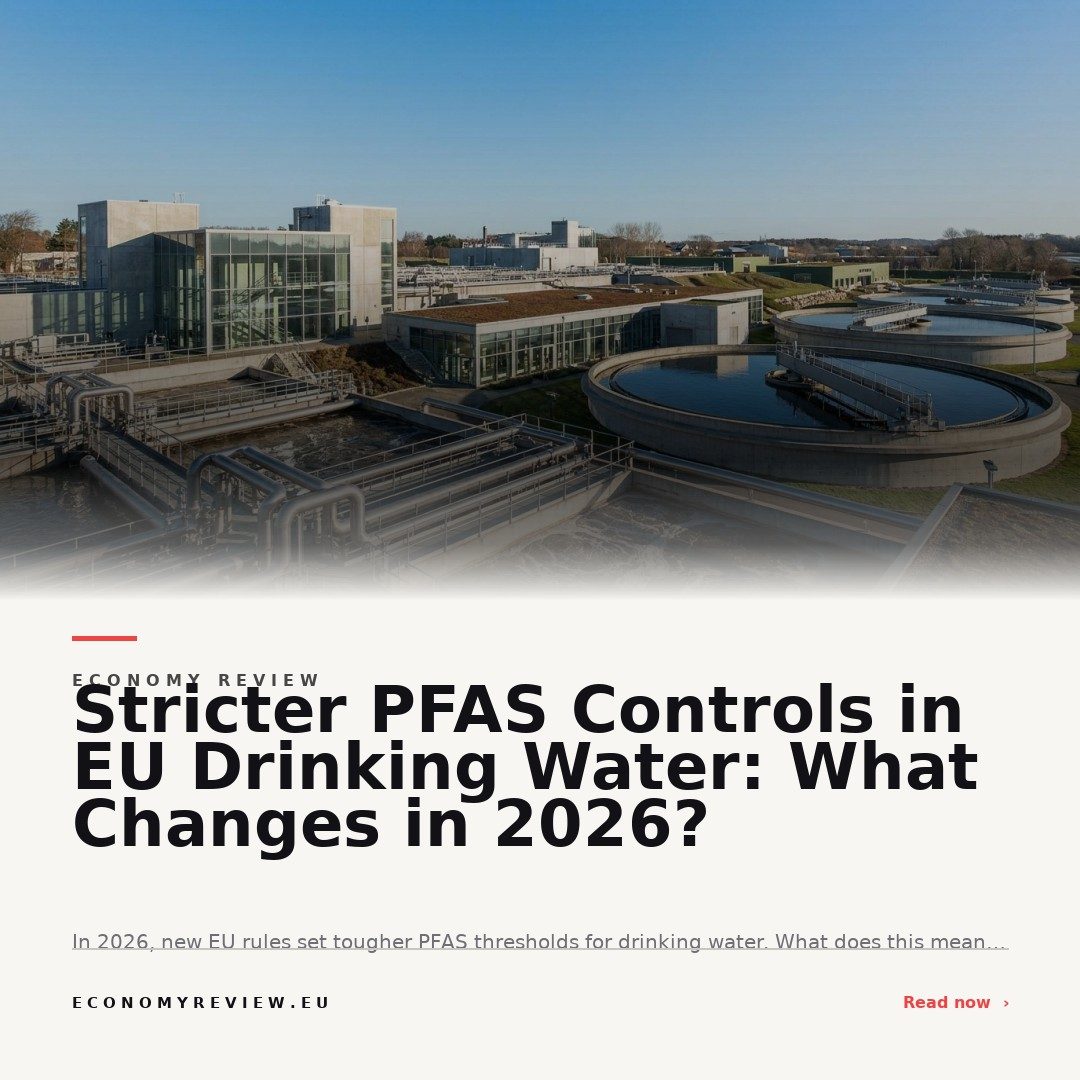

The European Union is introducing significantly stricter regulations on PFAS (per- and polyfluoroalkyl substances) in drinking water from 2026, marking a turning point for water safety across member states. The new measures obligate water suppliers, companies and municipalities to meet far lower PFAS thresholds, demanding upgraded monitoring systems and swift action on contamination cases. With mounting scientific concern over the health effects of these 'forever chemicals', the EU sets a new benchmark for global drinking water standards. The changes bring major operational impacts for both industry and public utilities, while consumers can expect greater transparency and assurance in water quality.
- EU mandates lower PFAS limits in public water supplies starting 2026
- Water utilities and companies require new monitoring and reporting tools
- Stronger consumer right to information on PFAS levels
- Significant investments in water treatment infrastructure expected
Background: Why the EU is targeting PFAS
PFAS have become a focus of public health policy due to their widespread use and persistence in the environment. Used in products ranging from non-stick cookware to industrial coatings, PFAS chemicals are exceptionally stable, leading to the nickname 'forever chemicals.' Their resistance to degradation means they can accumulate in water sources and living organisms, including humans. Links between PFAS exposure and health problems such as cancer and immune system disruption have been established, prompting regulatory initiatives worldwide. The EU’s Drinking Water Directive revision seeks to curb unnecessary exposure by setting enforceable limits for PFAS groups in tap water, a move seen as long overdue by many water quality advocates.
What changes from 2026?
The core of the new regulation is the introduction of substantially lower limit values for PFAS in drinking water. Starting in 2026, water suppliers must test for selected PFAS groups and the total PFAS content, with maximum concentrations established well below current levels. These rules apply to all supplies delivering more than 10 cubic meters per day or serving over 50 people. Utilities are required to routinely monitor, document and publish PFAS data, leading to the first comprehensive continent-wide PFAS mapping in drinking water. Should any exceedances be detected, rapid risk mitigation and public communication become mandatory. For industries responsible for potential PFAS releases—such as manufacturing and waste treatment—these developments underscore the urgent need for improved internal controls and environmental management systems.


Impacts on water sector and affected industries
Water utilities now face the pressing need for advanced analytical capabilities to accurately detect PFAS compounds at trace concentrations. Since existing treatment technologies like activated carbon may be insufficient for the most persistent variants, significant investment into new filtration and oxidation systems is anticipated. Industrial companies, particularly those in chemical production, metal plating, and waste management, are likely to encounter stricter discharge permits and greater liability for historical PFAS contamination. Compliance costs will rise, but rapid innovation in water treatment and monitoring equipment is expected to create both challenges and new business opportunities.
Legal and operational requirements for businesses
The updated directive introduces new obligations for businesses along the water supply chain. Enterprises must ensure their internal water sources are regularly tested and maintain clear documentation demonstrating compliance with the new PFAS thresholds. Failure to comply can result in fines, mandatory remediation or reputational damage. Companies are also advised to review their supply chains for hidden PFAS risks and substitute hazardous substances where alternatives exist. The regulation highlights the importance of environmental due diligence and proactive risk management throughout the value chain, as regulatory and public scrutiny regarding PFAS risks intensifies.
Implications for consumers and public health
For end consumers, the revised directive brings enhanced rights to clear, easily accessible information about PFAS in drinking water. Utilities must publicly disclose PFAS measurements, enabling citizens to better understand local water quality. European authorities see this as a critical step for building trust in public health protection. Meanwhile, the move supports early detection of hotspots and more targeted remediation, reducing long-term health risks. As research into PFAS toxicity evolves, the probability is high that further regulatory tightening will follow, meaning the measures effective from 2026 could be just the beginning of a new era in chemical safety for Europe’s water supply.
Connecting EU measures to global PFAS regulation
Europe’s 2026 PFAS initiative places it alongside the world’s pioneers in chemical regulation. These steps echo recent actions by countries like the United States, which has implemented its own maximum contaminant levels for PFAS in drinking water. The EU’s comprehensive approach, covering both individual and grouped PFAS compounds, could serve as a model for other jurisdictions. For multinational companies, harmonizing compliance strategies across regions is essential to mitigate legal and public relations risks.
Related Coverage
For further background on the regulatory framework and business impacts, see PFAS 2026: Stand der Regulierung, Auswirkungen und Perspektiven and EU verschärft ab 2026 PFAS-Kontrollen im Trinkwasser: Was Unternehmen jetzt wissen müssen.
Conclusion and outlook: Towards safer water and chemical stewardship
The stricter PFAS thresholds imposed by the European Union in 2026 raise the bar for water safety and environmental management, setting a precedent for global policy shifts in chemical governance. Significant investments, stronger oversight and active participation by both public and private actors will be required to ensure compliance and restore consumer confidence. As research continues and analytical methods improve, further refinements to PFAS regulations are likely. The 2026 directive is thus both a milestone and a starting point in Europe’s response to the 'forever chemicals' challenge.