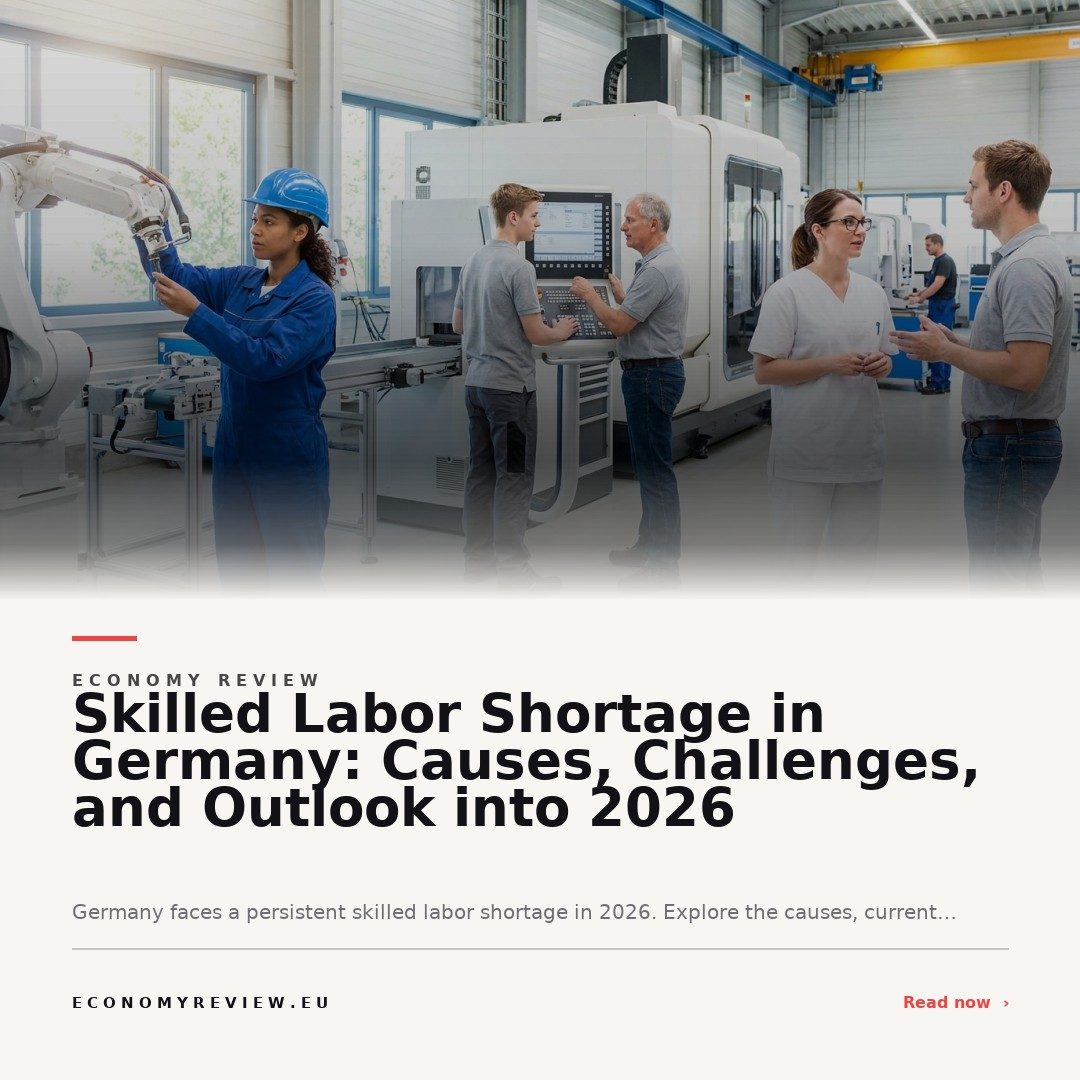
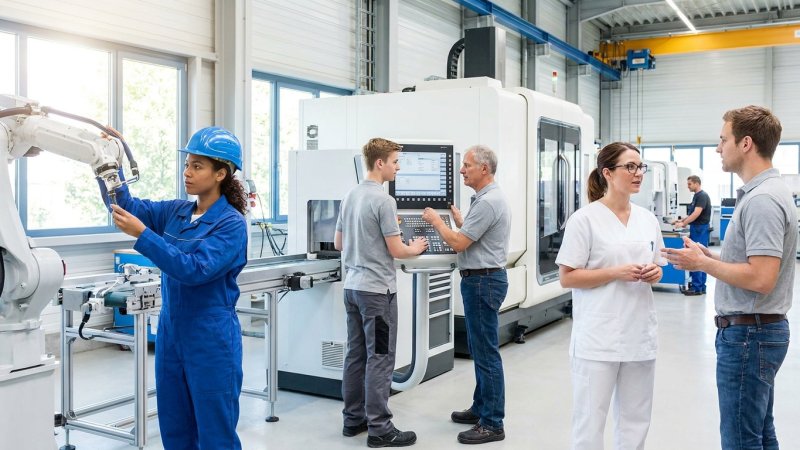
Germany is confronting an acute skilled labor shortage that is directly slowing growth in healthcare, IT, construction and engineering, and triggering far-reaching implications for the wider European Union. As of late 2026, the German government and the EU are enacting policy changes aimed at attracting talent and modernizing labor markets, but a fundamental transformation will be needed to reverse the trend. Germany’s challenge—nearly two million unfilled skilled positions—has evolved beyond sectoral crisis and stands as a test case for Europe’s ability to remain economically competitive under demographic pressure.
- The shortage affects 1.98 million jobs, mainly in healthcare, IT, construction and engineering [1].
- EU-level migration and labor policies are being redefined in response.
- Structural demographic change and skills mismatches are driving persistent gaps through at least 2026 [3][4].
What is driving Germany’s skilled labor shortage in an EU context?
Germany’s skilled labor shortage refers to an ongoing inability to fill positions that require formal vocational or academic qualifications, impacting core industries and public services. The scale is unprecedented—nearly two million vacancies in 2023, with businesses across sectors struggling to source essential expertise [1]. Demographic decline is the principal cause: the working-age population is shrinking fast, with up to 16 million workers expected to retire by 2026, raising alarms not only in Berlin, but across EU institutions concerned with cross-border competitiveness and social cohesion [3].
How are European and national policies responding?
Recognizing the threat to economic stability, Germany updated its Skilled Immigration Act in 2024 to ease entry for non-EU skilled workers, with a goal of attracting 400,000 new workers yearly [5]. The EU has supported policies streamlining recognition of qualifications, cross-border job mobility and digital upskilling across member states, seeing Germany’s crunch as reflecting a wider European labor market transformation. The German government accelerates credential recognition and seeks to link labor migration with rapid job placement—developments that may set precedents for EU-wide mobility rules.

Which sectors and regions are most challenged—and why?
Healthcare and eldercare sectors are the most strained, as nurses and specialists are in acute short supply, with some facilities unable to admit new patients [1]. IT and engineering are similarly impacted, raising competitiveness questions for Germany’s advanced manufacturing and digitalization strategies [3]. Regional disparities have deepened: eastern Germany and rural areas face the steepest shortages, with urban hubs able to compete more successfully for international recruits [5]. For EU labor mobility, these disparities are instructive, showing how internal migration alone cannot solve bottlenecks without broader educational and labor reforms.
Economic and business impacts: project delays, cost, and innovation at risk
Unfilled skilled positions are already producing tangible economic costs. Delayed projects, higher payroll costs, and missed opportunities for digital transformation are cited by manufacturers, tech firms and service providers. Competitiveness in export markets is threatened, and supply chains may slow as Germany’s Mittelstand—small and medium-sized firms crucial to EU industry—struggles to grow [3]. Research institutes in Germany and Brussels argue that these bottlenecks lower not only Germany’s potential growth, but also Europe’s capacity for resilient supply chains and innovation leadership [4].
Are educational and vocational pathways keeping pace?
Intense debate continues around the fit of Germany’s education and vocational training for a shifting industrial landscape. Employers call for faster integration of digital curricula and mid-career upskilling to respond to green technology, digitalization and advanced manufacturing. The EU shares these concerns, supporting apprenticeships and mutual recognition frameworks for skills. However, with curricula lagging technological change, the skills mismatch persists as a key driver of labor gaps, despite Germany’s historically strong "dual system" [2].
Typical Problems for Businesses and Society
For German and European businesses, the skilled labor shortage leads to higher operating costs and a loss of agility; SMEs, in particular, face barriers as recruitment from abroad and automation investments demand new resources [3]. For society, the greatest risks are felt in social care: eldercare and hospitals struggle to serve aging populations, threatening stability in the face of rapid demographic transition [1]. The uneven burden between regions also highlights a growing gap between Germany’s economic centers and peripheries, a challenge also visible in other EU member states [5].
Recent and Ongoing Developments (as of September 2026)
The 2024 revision of Germany’s Skilled Immigration Act stands as a major step, enabling swifter hiring of third-country nationals, but economic experts and industry associations are warning that bottlenecks will persist through at least 2026 [4][5]. Automation, flexible work policies and targeted upskilling are gathering pace across sectors, while new EU pilot schemes aim to make cross-border recruitment and digital training more seamless. Nationwide, new gender equality and "silver economy" initiatives seek to raise participation rates for both women and older workers—an approach EU policymakers are now championing as well [1].
What is the short- and long-term outlook?
Skilled labor shortages in Germany will continue to constrain economic and industrial growth at least until 2026, even as migration, automation and upskilling policies deliver partial relief. The demographic math is daunting: retirements will outpace new entrants for several more years. Success depends on the effectiveness of ongoing immigration reforms, the digital transformation of vocational training, and expansion of labor force participation among underrepresented groups. The interplay between German policy and broader EU labor regulation now sets a crucial precedent for Europe’s response to aging societies and economic competitiveness challenges.
Conclusion: Germany as a European test case for labor market reform
Germany’s skilled labor shortage, while intensely national in scale, now drives a range of EU-level debates on economic resilience, migration, and education. For business leaders, analysts and policymakers, the lesson is clear: without coordinated, structural reforms—and strengthened linkages between member states—the competitiveness of the entire EU is at risk. How Germany navigates this challenge will shape not only the future of its industries, but also the trajectory of European labor and economic policy for years to come.
Quellen
[1] Why Germany faces a skilled labor shortage (DW, 2024-02-19)
[2] A New Skilled Labor Shortage Haunts Germany (Financial Times, 2023-11-28)
[3] German business facing unprecedented skilled labor crunch (Reuters, 2023-09-12)
[4] Fachkräftemangel: Engpässe bremsen Konjunktur bis 2026 aus (Handelsblatt, 2023-10-16)
[5] Germany’s Skilled Worker Shortage – An Overview in English (Make it in Germany, 2024-03-01)