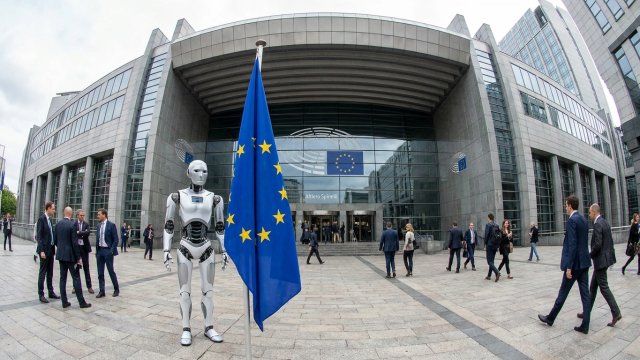

Digital sovereignty enables Europe to steer its technological future and protect its digital infrastructure. By addressing dependencies and promoting European solutions, Europe can better secure personal data, promote innovation and maintain its economic autonomy in a globally connected world.
Digital sovereignty is the ability of individuals, businesses, and governments within Europe to control and decide their own digital destiny, free from external dominance over technological infrastructure, standards, and data flows. As Europe moves deeper into the digital age, digital autonomy has become central to economic competitiveness, innovation, and the safeguarding of fundamental rights.
- Europe aims to reduce reliance on non-European tech providers by investing in local infrastructure and data management.
- Efforts in regulation, digital literacy, and fostering local innovation are key strategies for achieving sovereignty.
- Significant challenges remain, including geopolitical dependence and a need for stronger pan-European cooperation.
What is Digital Sovereignty and Why Does It Matter in Europe?
Digital sovereignty means having control over digital infrastructure, data management, and the foundational technologies that underpin modern communication, economy, and society. For Europe, this is not simply a matter of technological pride, but essential for protecting the interests of citizens and businesses in a rapidly shifting global landscape, especially with cloud computing, AI, and 5G infrastructure becoming ever more integral.
The digital world is largely shaped by global technology giants, many headquartered outside Europe, resulting in a dependency that raises concerns over privacy, data security, and the strategic vulnerability of European economies. European digital sovereignty seeks to counterbalance these dependencies, enabling self-determined regulatory decisions and fostering local innovation ecosystems. This autonomy is seen as a safeguard for democracy, local culture, and economic power.


How Does Europe Pursue Digital Sovereignty Today?
Europe's strategy for digital sovereignty blends legislative initiatives, investment in digital infrastructure, and talent development. By strengthening the European cloud sector, promoting trustworthy AI frameworks, and updating cybersecurity approaches, European nations are working to reduce reliance on external providers and ensure that critical data and operations remain governed by European laws and values.
The European Data Strategy and the Digital Markets Act are prominent examples, aiming to create a framework where data sharing supports innovation but is secured according to European standards. National governments and the European Union alike invest in initiatives such as Gaia-X, an ambitious project to create a federated, transparent, and secure digital data infrastructure for the continent.
Key Opportunities for Europe’s Self-Determined Digital Future
Pursuing digital sovereignty unlocks chances for Europe to strengthen its high-value industries by keeping data and innovation local. New digital infrastructure can fuel homegrown start-ups and deep tech ventures, while a focus on digital skills fosters a robust workforce able to compete globally. Moreover, digital sovereignty allows for greater protection of citizens’ privacy and a firm grip on cybersecurity threats, reinforcing trust across all sectors.
Europe’s coordinated approach can also set exemplary standards for data governance and AI ethics, positioning the continent as a global leader in responsible technology deployment. A digitally sovereign Europe is better equipped to shape international digital rules rather than simply adopting external standards.
What Barriers Complicate Europe’s Path to Digital Sovereignty?
Despite strong political will, significant hurdles persist. European tech start-ups often struggle to compete with well-funded global rivals, and investments in key technologies, such as semiconductor manufacturing or advanced cloud services, have traditionally lagged behind those of the US and Asia. Fragmented regulatory environments and differing national priorities can hinder coordinated action at the European level, slowing progress toward common goals.
Furthermore, reliance on non-European software, hardware, and platforms for critical infrastructure exposes vulnerabilities that are difficult to eliminate quickly. Existing digital infrastructure is deeply intertwined with global networks, making decoupling an immense challenge, both technically and economically. Policymakers must therefore balance the need for sovereignty with the realities of global collaboration and trade.
Core Challenges: A Closer Look at Data, Cloud, and Standards
One of the most pronounced challenges is the management and governance of data. The vast amounts of data generated in Europe are often stored or processed by non-European companies, raising concerns about adherence to local laws and ethical standards. Efforts like Gaia-X and the European Data Governance Act aim to address this by providing clear rules and technical solutions for trusted data exchange within the EU.
Another sticking point is the digital cloud market, where non-European providers still dominate. Building a vibrant European cloud ecosystem requires not only technological capacity but also trust from users—achieved through transparency, security, and compliance with EU values. Finally, the ability to set and shape global standards for digital technologies is crucial for autonomy. If Europe does not participate actively in international standardization, its ability to export its own approaches and protect its interests diminishes.
Digital Sovereignty and Innovation: Catalysts for Economic Strength
Fostering digital sovereignty is about more than security—it is about sparking innovation. When Europe shapes its own technological destiny, it can tailor platforms, products, and services to its unique social and economic needs. This creates a fertile environment for start-ups and established firms alike, driving the kind of breakthroughs vital for long-term prosperity.
Educational investments in STEM, programs to attract global tech talent, and cross-border research collaborations all contribute to a thriving digital ecosystem. Policies tailored to local strengths—such as the green and circular economy, industrial robotics, or e-government—reinforce Europe’s role as an innovation powerhouse with high global standards for data protection and AI ethics.
Insights: Typical Problems in Achieving Digital Sovereignty
Frequently, European regulatory complexity becomes a barrier to quick implementation of digital strategies, leading to slow uptake of new technologies among organizations and businesses. Many SMEs, which form the backbone of Europe’s economy, lack resources to adapt to fast-evolving digital environments and often depend on external technologies for critical operations. Training and digital skills deficits also hinder the potential workforce, complicating the sought-after transition to digital autonomy.
The cooperative efforts required across national borders sometimes clash with differing political and economic interests, while persistent funding gaps for digital start-ups and infrastructure exacerbate the challenge. In addition, public awareness about the necessity and benefits of digital sovereignty often lags behind the policy discourse, hampering societal buy-in for major initiatives.
Current Developments: Europe’s Bold Steps and New Initiatives
As of late 2026, the European Union and member states are redoubling efforts to finance next-generation semiconductor production, accelerate the deployment of AI made in Europe, and ensure that digital public administration projects reach all citizens efficiently. Major funding programs support both “deep tech” innovation and digital infrastructure upgrades, while regulatory frameworks aim to foster healthy, open competition among service providers on fair and transparent terms.
Cross-border alliances in research and industrial policy are growing, and new educational initiatives seek to provide digitally relevant skills from early schooling through professional training. Meanwhile, the Digital Services Act and Data Act are in force, providing a foundation for high standards of user rights, transparency, and platform accountability. These efforts culminate in a vision for a digital future where autonomy, security, and shared European values shape the next era of technology.
What Should Stakeholders in Business and Society Consider?
Businesses and individuals play a pivotal role in advancing digital sovereignty. Companies are encouraged to review their technology supply chains and invest in local solutions where possible. Enhanced digital literacy and critical thinking about data, infrastructure, and supplier choices are as important as any legislative framework. Societal support for sovereignty initiatives is vital, as widespread understanding of their importance underpins successful adoption and integration of sovereign solutions.
In this landscape, collaboration is essential—across industries, borders, and educational institutions. Europe’s journey toward digital sovereignty requires strategic patience, robust investment, and broad public engagement, ensuring that autonomy does not mean isolation but rather a foundation for active, global digital contribution.
Conclusion and Outlook: The Road Ahead for Digital Sovereignty in Europe
The striving for digital sovereignty defines Europe’s digital policy for 2026 and beyond, shaping how technology, society, and the economy interact. Opportunities abound for fostering innovation, economic resilience, and citizen empowerment, even as major challenges persist. By harnessing collaborative power and nurturing a culture of innovation and trust, Europe is poised to chart a distinct, self-determined path in a globally networked digital world—one where sovereignty unlocks both security and opportunity for generations to come.